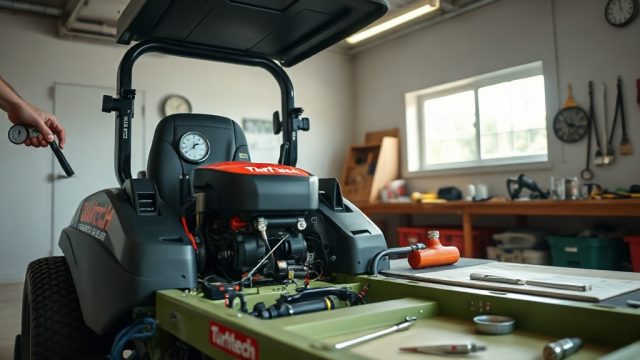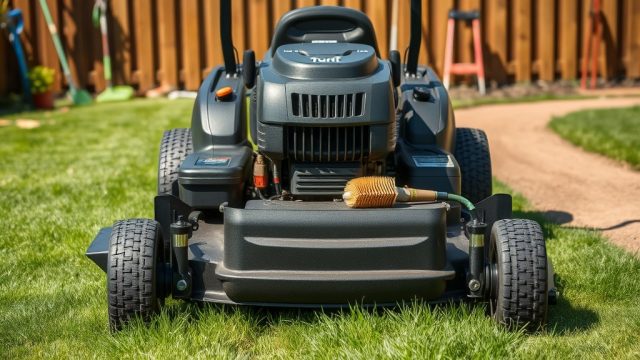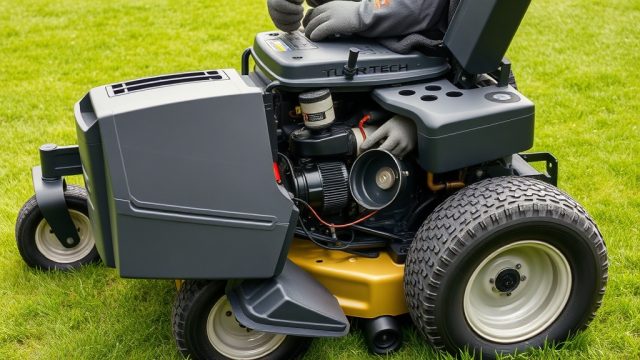
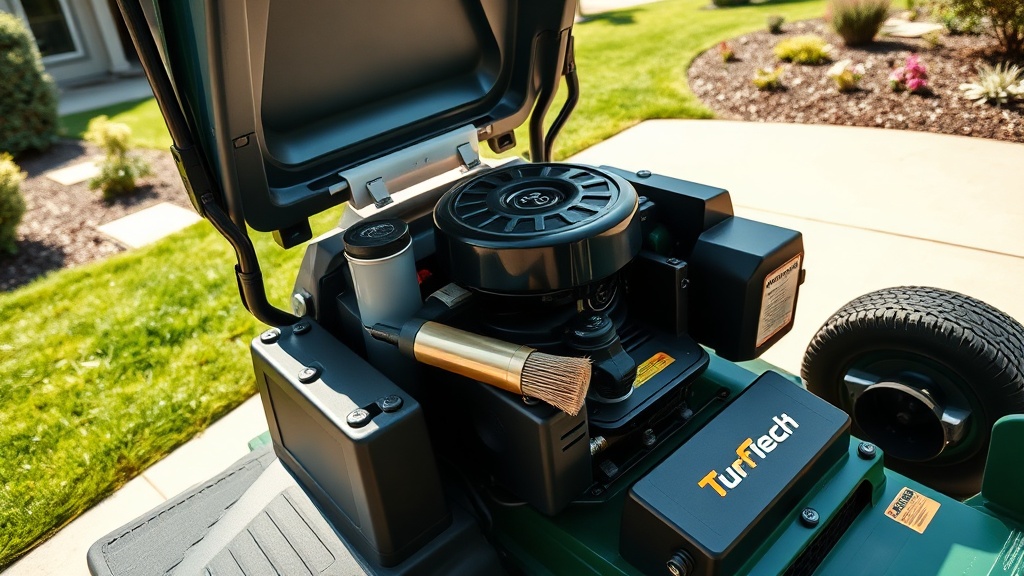
Carbon buildup in small engines is a common cause of power loss, hard starting, and rough idling. For owners of the TurfTech T-4600E, addressing carbon deposits in the combustion chamber and on piston rings is essential to restore full engine performance. This step-by-step guide provides a systematic approach to safely remove carbon buildup and return your mower to peak operating condition.
What Are the Signs That the TurfTech T-4600E Has Carbon Buildup?
Recognising the symptoms early can prevent more serious engine damage. Affected machines typically exhibit reduced power output, especially under load, such as when cutting thick grass. Owners may also notice that the engine cranks but fails to start, or starts with difficulty. Another clear indicator is excessive exhaust smoke, which can appear black or blue, driven by unburned fuel and oil residue. Fuel economy also declines, as carbon deposits alter the air-fuel mixture and increase internal friction.
In severe cases, carbon pieces can dislodge and lodge against a valve seat, causing a loss of compression. Listening for a knocking or pinging sound from the engine is also wise, as these noises point to pre-ignition caused by hot carbon particles. Using a compression tester can confirm suspicions: readings below 90 psi on a warm engine often signal carbon interference.
For a proper diagnosis, park the TurfTech T-4600E on a level surface and remove the spark plug. A borescope inspection through the spark plug hole allows direct visualisation of deposits on the piston crown and cylinder head.

What Tools and Supplies Are Needed for Carbon Removal?
Gather the following items before beginning the procedure to avoid interruptions. Most of these are available at any hardware or automotive store, with total costs typically under £45.
| Tool / Supply | Purpose | Approximate Cost (GBP) |
|---|---|---|
| Compression tester (0–300 psi) | Diagnose carbon severity | £18–£28 |
| Borescope (rigid or flexible) | Visual inspection of deposits | £12–£35 |
| Socket set (10mm, 13mm, 14mm) | Remove spark plug and cylinder head | £15–£30 |
| Torque wrench (Nm range 10–50 Nm) | Reassemble to spec | £20–£40 |
| Piston stop tool | Lock piston at TDC | £8–£12 |
| Carbon removal spray (e.g., Sea Foam, Berryman) | Chemical softening of deposits | £8–£15 per can |
| Brass brush set | Manual scrubbing of piston/head | £5–£10 |
| New spark plug (NGK BPR6ES or equivalent) | Replace after cleaning | £4–£7 |
| Engine oil (SAE 10W-30, 1 quart) | Lubricate rings during reassembly | £6–£10 |
| Gasket set (cylinder head and intake/exhaust) | Prevent leaks | £10–£18 |
Note that the TurfTech T-4600E uses a 443cc single-cylinder engine. Always refer to the service manual for exact torque values and gasket part numbers. If you need to remove the mower deck for easier access, follow the TurfTech T-4600E Deck Leveling Procedure: Step-by-Step Guide for Even Cut.
How to Safely Remove the Cylinder Head for Full Access?
Removing the cylinder head is necessary for thorough cleaning of both the head and the piston crown. Begin by disconnecting the battery earth terminal to prevent accidental starting. Drain the engine oil into a suitable container, as oil can leak past the rings when the cylinder head is removed.
Remove the air cleaner assembly and the carburettor to gain clearance. Label the intake and exhaust gaskets for correct reinstallation. Using a 10mm socket, remove the two bolts securing the exhaust manifold, then detach the exhaust pipe. Next, remove the spark plug cap and unscrew the plug with a 13mm socket.
With a 14mm socket, loosen the four cylinder head bolts in a crosswise pattern, turning each bolt a quarter turn at a time until all are free. Lift the cylinder head straight up to avoid bending the pushrods. You will now see the top of the piston and the upper cylinder bore. Inspect the valves as well—carbon deposits on valve faces can prevent proper sealing.
Before proceeding, check the TurfTech T-4600E Electric Start Wiring Diagram: Step-by-Step Guide if you need to disconnect any wiring harnesses attached to the engine shroud.
What Is the Most Effective Method to Clean Carbon Deposits From the Piston and Head?
The combination of a chemical soak and gentle mechanical scrubbing yields the best results without damaging engine components. First, rotate the engine by hand using the flywheel nut until the piston is at top dead centre (TDC). Use a piston stop tool to secure the crankshaft.
Spray a generous amount of carbon cleaner onto the piston crown and valve faces. Allow it to soak for 15 to 20 minutes. The aerosol solvents break down the hard carbon residues. After the soak, use a brass brush to scrub the deposits. Do not use steel brushes, as they can score the aluminium piston surface. For stubborn areas, a plastic scraper or a wooden dowel can help lift carbon without causing damage.
Clean the cylinder head combustion chamber and valve ports similarly. Manually rotate the engine so that the piston moves down, then spray the cleaner into the cylinder bore above the rings. This can loosen carbon trapped in the ring grooves. Rotate the engine again and wipe out any remaining fluid with a lint-free cloth.
If deposits are extremely thick, repeat the soaking process a second time. After cleaning, wipe all surfaces dry and inspect for any remaining carbon flakes. Be meticulous—a single piece can cause hot spots and pre-ignition.
After cleaning, always replace the cylinder head gasket with a new one. Apply a thin film of engine oil to the piston rings and cylinder wall before reinstalling the cylinder head. Torque the head bolts to 22 Nm in the correct sequence—usually the two inner bolts first, then the two outer bolts. Reinstall the exhaust manifold with a new gasket and reassemble all removed components.
How to Verify Proper Engine Performance After Carbon Removal?
After reassembly, start the engine and let it idle for five minutes. Listen for smooth operation without knocking. Gradually increase the throttle to full speed and observe the exhaust; any smoke should disappear within a minute as residual cleaner burns off. Perform a compression test again—a reading of 110–120 psi on a warm engine is normal for a clean TurfTech T-4600E engine.
Take the mower for a test run under load, such as mowing a section of tall grass. The engine should pull strongly without hesitation. If the mower deck belt was removed, check that the blade engagement is crisp. For issues with belt tension, consult the TurfTech T-4600E Deck Belt Replacement: Step-by-Step Guide.
In cases where carbon buildup returns quickly, consider checking the fuel system for stale fuel or incorrect air-fuel mixture. Excess oil consumption can also be a factor; verify that the breather system is not clogged. A persistent carbon problem may indicate a need for TurfTech T-4600E Transmission Fluid Change: Step-by-Step Guide and Tips to ensure the drivetrain isn’t overloading the engine.
What Owners Say About Carbon Removal on the TurfTech T-4600E
Many owners on forums report that a thorough carbon clean restores the engine’s original power and eliminates hard-starting issues. One user noted that after cleaning, the engine started on the first pull even after the mower had sat for the winter. Another owner observed that fuel consumption dropped by roughly 15 percent, which more than justified the half-day labour investment.
However, some warn against using aggressive chemical treatments that can damage rubber seals. One experienced mechanic advises using only dedicated carbon cleaners rather than carburettor cleaner, which can be too harsh. Several owners recommend combining the carbon removal with a valve clearance check, as carbon often masks loose valve seats. If you experience traction slipping after reassembly, check the front wheel drive according to the TurfTech T-4600E Front Wheel Drive Traction Slipping: Causes and Fixes. For steering issues that appear only after removing the cylinder head, refer to the TurfTech T-4600E Steering System Alignment: Step-by-Step Guide.
Frequently Asked Questions
Q1: How often should I perform carbon removal on the TurfTech T-4600E?
A1: Typically, every 200–300 hours of operation or when you notice a 20% power loss. If you use the mower infrequently, an annual cleaning is sufficient.
Q2: Can I use a commercial fuel additive to prevent carbon buildup?
A2: Yes, fuel system cleaners like PEA-based additives can help, but they cannot remove heavy deposits already formed. Use them as a preventive measure between scheduled cleanings.
Q3: Is it safe to run the engine with a carbon cleaner spray without disassembling?
A3: Some products allow in-engine cleaning via the spark plug hole, but it may not remove deposits completely. Long-term reliance on these methods can lead to loose carbon pieces entering the exhaust valve.
Q4: Will carbon removal fix a hard-starting engine that still turns over?
A4: Often yes, because carbon binds the piston rings and reduces compression. However, also check the battery and starter if the engine is slow to crank. See the TurfTech T-4600E Electric Start Wiring Diagram: Step-by-Step Guide for starter circuit testing.
Q5: Do I need to replace the cylinder head gasket every time I clean carbon?
A5: Absolutely. Even a reused gasket that appears intact may leak under pressure, causing loss of compression and overheating.
Q6: Why does my engine still smoke after cleaning?
A6: Residual cleaner inside the combustion chamber can cause brief smoke. If smoking persists more than 10 minutes, check for worn valve seals or a stuck piston ring—cleaning may have dislodged a broken ring segment.