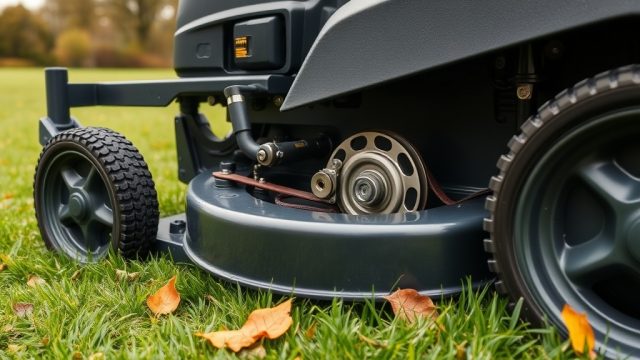
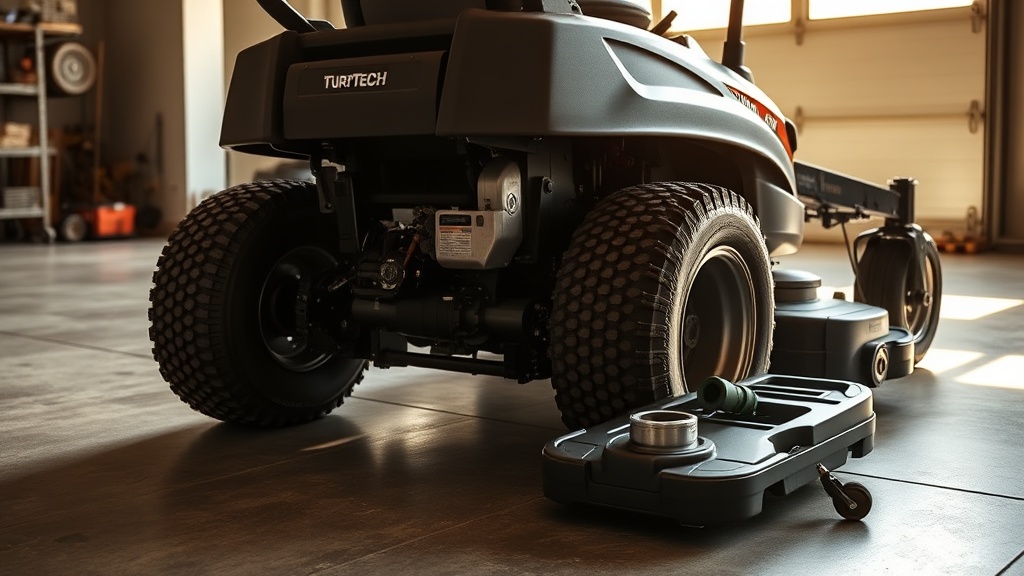
Maintaining the TurfTech T-4600E’s hydrostatic transmission is critical for smooth operation and long service life. Over time, the transmission fluid breaks down, picks up moisture, and loses its lubricating properties, leading to sluggish performance, hard shifting, or even total failure. This step-by-step guide covers everything needed to complete a proper fluid change, from selecting the correct oil to bleeding air from the system.
Why Does the TurfTech T-4600E Transmission Fluid Need Regular Changes?
The transmission in the TurfTech T-4600E uses hydrostatic fluid to transfer power from the engine to the drive wheels. Unlike engine oil, transmission fluid experiences severe heat cycles and contamination from clutch debris and water condensation. Over about 200 to 300 hours of use, the fluid becomes less efficient. Neglecting this service can lead to internal damage that requires a full rebuild or replacement. Regular changes also help prevent issues detailed in our TurfTech T-4600E Transmission Problems: Troubleshooting and Repair Guide.
What Tools and Fluids Are Required for the Job?
Before starting, gather all necessary equipment. Using the wrong fluid is the most common mistake, leading to immediate damage. The T-4600E requires proprietary hydrostatic transmission fluid; standard engine oil or universal tractor fluid (UTF) will void the warranty and cause seal swelling.
- Transmission fluid: 2.5 quarts of TurfTech OEM Hydro-Gear fluid or an equivalent SAE 10W-30 synthetic hydrostatic oil meeting J20C specification. Expect to pay around $25–35 per quart at local dealers.
- Drain pan: At least 3-quart capacity to capture the old fluid.
- Ratchet & socket set: 10mm, 13mm, and 17mm sockets for drain and fill plugs.
- Torque wrench: To tighten plugs to the correct specification (typically 15–20 ft-lb).
- Disposable gloves & rags: Hydrostatic fluid is slippery and stains concrete.
- Funnel with long flexible spout: Helps reach the fill port without spilling.
- Bleed kit (optional but recommended): A vacuum pump or syringe for removing air from the system.
Fluid Specification Comparison
| Fluid Type | Viscosity | Cost per Quart | Compatibility |
|---|---|---|---|
| TurfTech OEM Hydro-Gear | SAE 10W-30 | €32 | Perfect |
| Castrol Transynd HD | SAE 10W-30 | €28 | Acceptable |
| Universal Tractor Fluid (UTF) | SAE 15W-40 | €18 | Not Recommended – voids warranty |
| Standard Motor Oil | SAE 10W-30 | €12 | Not Recommended – causes seal failure |
How to Drain the Old Transmission Fluid Safely?
Draining the fluid correctly prevents environmental contamination and ensures all old oil is removed. The T-4600E has two drain points: a main drain plug on the bottom of the transmission housing and a smaller plug on the side near the cooling fan.
- Park the machine on level ground and allow the engine to cool completely. Hot fluid can cause severe burns.
- Place the drain pan beneath the main drain plug. Use a 17mm socket to loosen the plug slowly. Some fluid may splash, so position the pan offset first, then slide it directly under.
- Remove the side drain plug using a 13mm socket to allow air to enter and fully evacuate the system. Expect about 2.25 quarts to drain out.
- Inspect the drained fluid for metallic shavings or dark discoloration. Heavy debris indicates internal wear; refer to the TurfTech T-4600E Transmission Problems: Troubleshooting and Repair Guide for further diagnosis.
- Clean both drain plugs with a wire brush and replace any copper sealing washers if damaged. Reinsert and torque to 18 ft-lb.
What Is the Correct Procedure for Refilling and Bleeding the System?
Refilling seems straightforward, but air trapped in the lines will cause the tractor to shudder or fail to move. This step is the most critical for a successful fluid change.
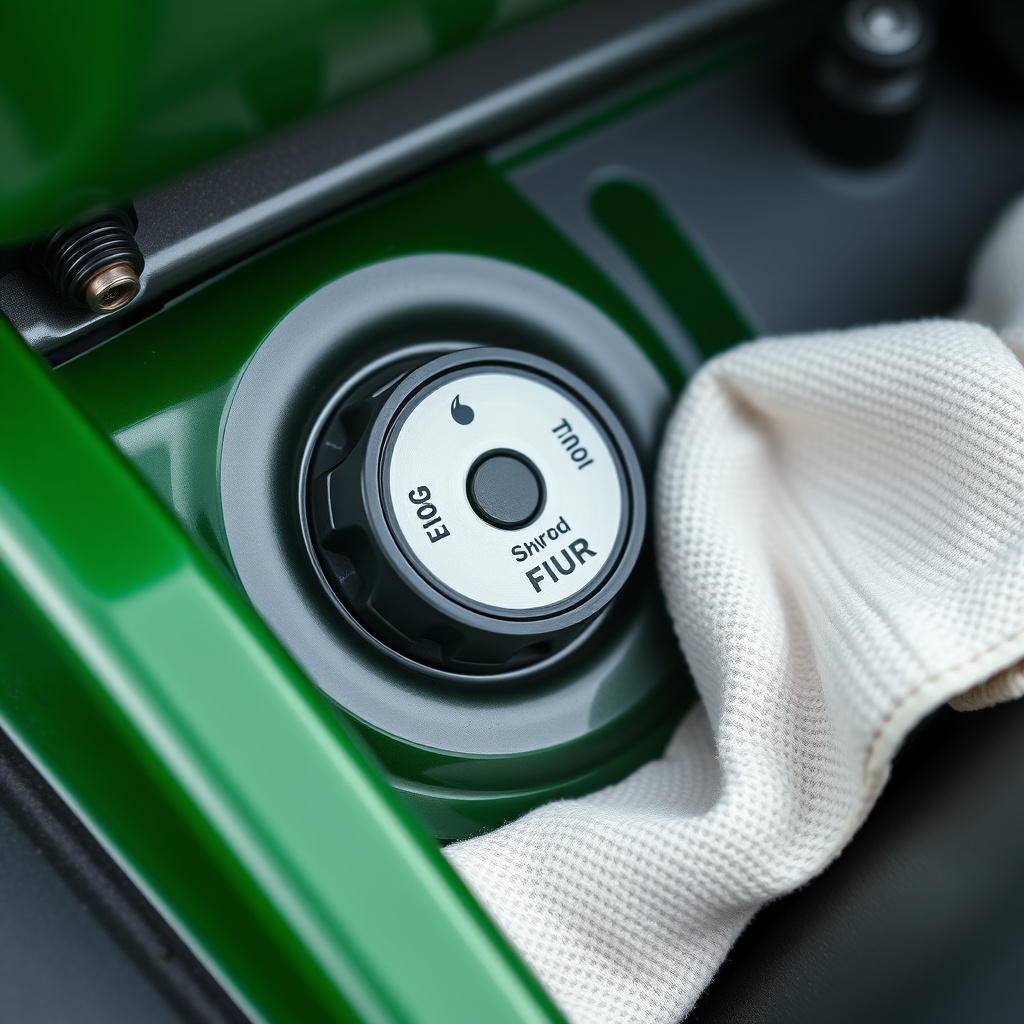
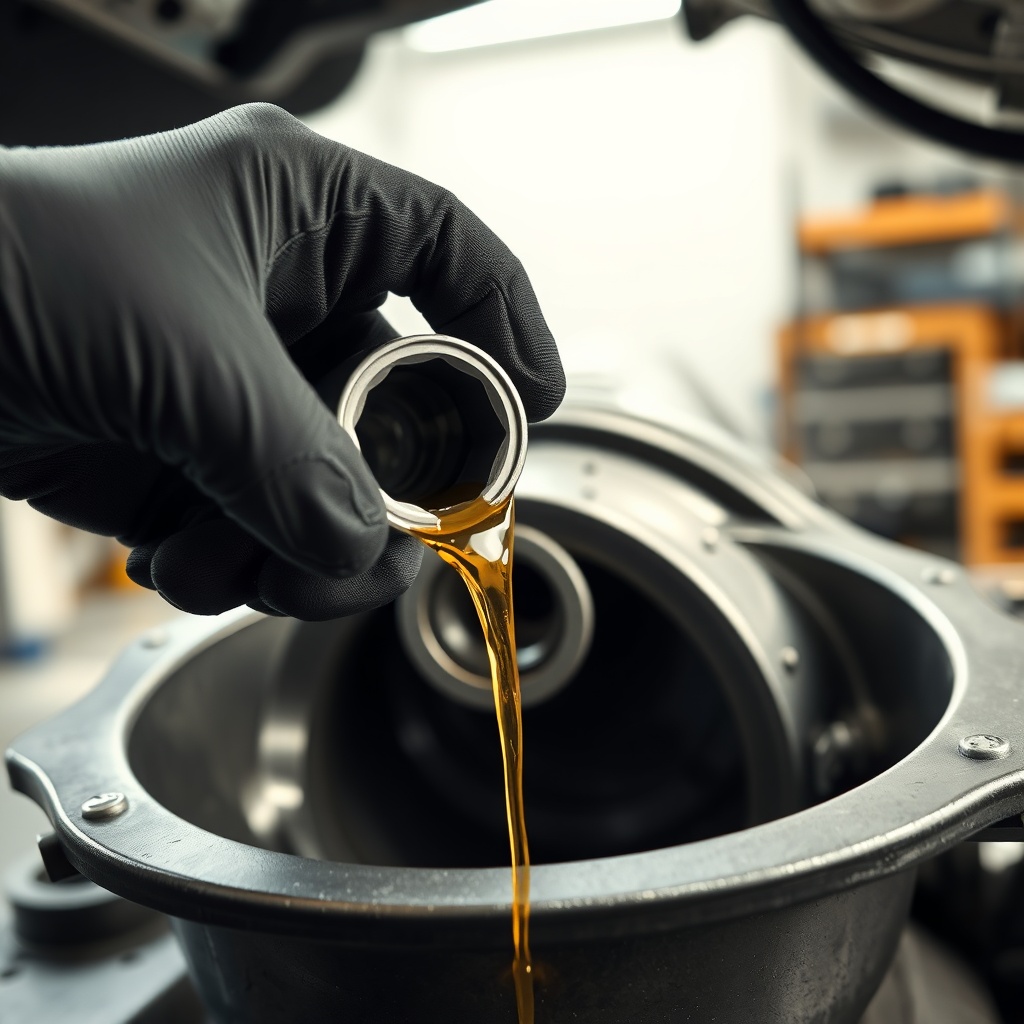
- Locate the fill port on top of the transmission. Remove the cap and insert the funnel. Slowly add the new OEM fluid until the dipstick reads at the “COLD FULL” mark. Do not overfill.
- Start the engine and let it idle for 30 seconds. Do not drive the tractor yet. The pump will begin circulating fluid, and the level will drop as air is pushed into the reservoir.
- Stop the engine and top off the fluid to the “COLD FULL” mark again. This may need repeating 2–3 times as air pockets escape.
- For stubborn air (often after a transmission rebuild or when the tractor was run low), use a vacuum pump kit. Attach the bleed kit to the vent line on the transmission case and pull a mild vacuum (10 inHg) for one minute. This pulls air out without sucking fluid out. Then refill as normal.
- Start the engine again, engage the parking brake, and slowly cycle the motion control lever from forward to reverse at idle speed for 30 seconds. This helps purge the final air bubbles. Turn off the engine and check fluid level once more.
Refer to the TurfTech T-4600E Brake System Adjustment: Step-by-Step Guide if the brake feels spongy after transmission work, as air can affect brake operation.
What Owners Say About the T-4600E Transmission Fluid Change Process
Long-time TurfTech users frequently note that the fluid change is easier than most competitors once you accept the higher fluid cost. “I was nervous the first time, but after I got the right fluid and a good funnel, it took less than an hour,” reports one owner on a forum. Another warns, “Don’t skip the bleeding step – I did once and the tractor lurched violently when I went to move it. Had to redo everything.” Several owners suggest using a syringe to remove excess fluid rather than trying to drain again. The most common complaint is the price of OEM fluid, but most agree it’s cheaper than replacing the transmission. Check the TurfTech T-4600E Traction Drive Belt Replacement: Step-by-Step Guide if the belt is older, as a worn belt can mimic transmission issues.
How Can You Extend the Life of the Transmission Between Changes?
Beyond regular fluid changes, simple habits protect the hydrostatic unit. First, always warm up the transmission by driving slowly for a couple of minutes before mowing thick grass. Cold fluid is more viscous and can stress the pump. Second, avoid shifting direction at full throttle—let the tractor slow before reversing. Third, keep the cooling fins on the transmission clean; dirt buildup causes overheating and fluid breakdown. Use compressed air or a soft brush every 50 hours. Fourth, check fluid level monthly, as minor leaks at seals will show up as low fluid first. If you notice a drop in level quickly, suspect a leak. The TurfTech T-4600E Fuel Injector Cleaning: Step-by-Step Guide and Tips can help if engine performance issues contribute to heavy loading on the transmission.
Finally, if you experience stubborn air pockets after a fluid change, the TurfTech T-4600E Deck Belt Tensioner Pulley Replacement: Step-by-Step Guide may be relevant if belt slip during deck engagement creates additional load. Also maintain proper cutting height with the TurfTech T-4600E Deck Leveling Procedure: Step-by-Step Guide for Even Cut to avoid straining the drive system.
Frequently Asked Questions
Q1: How often should I change the transmission fluid on the TurfTech T-4600E?
A: Every 200 hours or annually, whichever comes first. If you operate in dusty conditions or tow heavy loads, reduce to 150 hours.
Q2: Can I use synthetic motor oil instead of hydrostatic fluid?
A: No. Motor oil lacks the friction modifiers and anti-wear additives required for the transmission’s piston pumps. Use only TurfTech OEM or approved equivalents.
Q3: Why is my tractor moving slowly after a fluid change?
A: This usually indicates trapped air. Repeat the bleeding procedure outlined above. If the problem persists, check the motion control linkage adjustment and see the troubleshooting guide.
Q4: What does the color of the old fluid tell me?
A: Light brown is normal. Dark brown or black suggests overheating or contamination. Milky appearance indicates water ingress, which means a seal leak or condensation—replace immediately.
Q5: Do I need to replace the transmission filter during a fluid change?
A: The T-4600E has a screen filter inside the housing that rarely needs changing. Replace only if debris is found during disassembly. Most fluid changes do not require filter service.
Q6: Can I flush the transmission with a solvent?
A: No. Flushing with any chemical can damage rubber seals and plug internal passages. Simply drain the old fluid and add new.