Why Your TurfTech T-4600E Battery Goes Dead Overnight
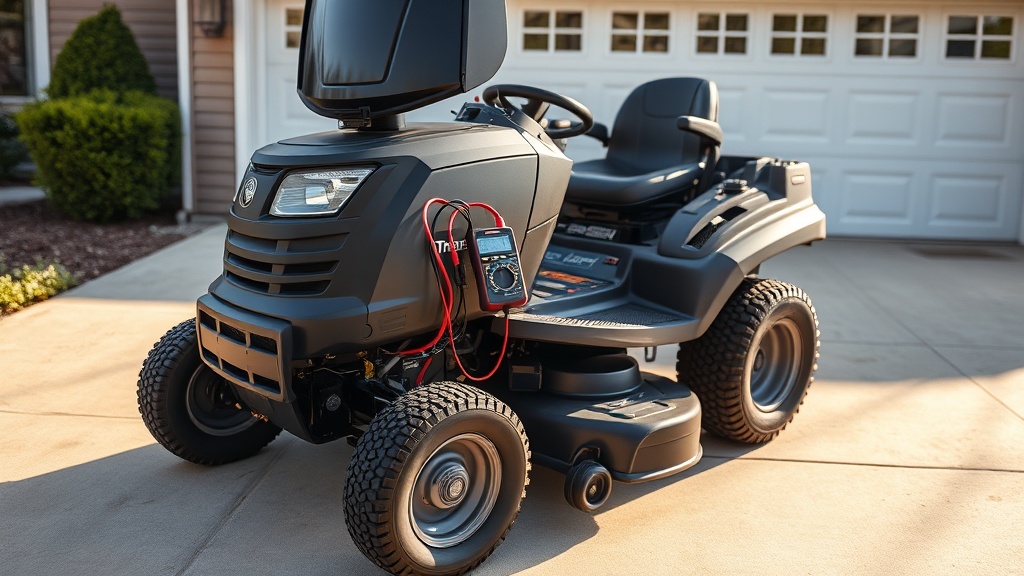
A fully charged battery on a TurfTech T-4600E that drains within 12 to 24 hours points to a parasitic electrical draw. This slow leak, often less than 50 milliamps, can strand you mid-mow and repeatedly kill the battery. In this guide, I’ll walk you through a methodical voltage drop test and current draw measurement to find the culprit, saving you time and the cost of a new battery.
How Do I Safely Prepare the TurfTech T-4600E for a Parasitic Draw Test?
Before connecting any meter, you must secure the mower and disable systems that could produce false readings. Start by disconnecting the spark plug wire and securing it away from the plug. Next, turn the ignition key to the OFF position and remove it. Close the fuel shutoff valve if equipped. Allow the machine to sit for at least 10 minutes to let modules like the electronic control unit (ECU) and seat switch controller enter sleep mode. If you have a memory saver or a backup battery, connect it to the OBD port or cigarette lighter socket to retain radio and module settings. Otherwise, expect to reset clock and radio presets after the test.
What Tools and Multimeter Settings Do I Need?
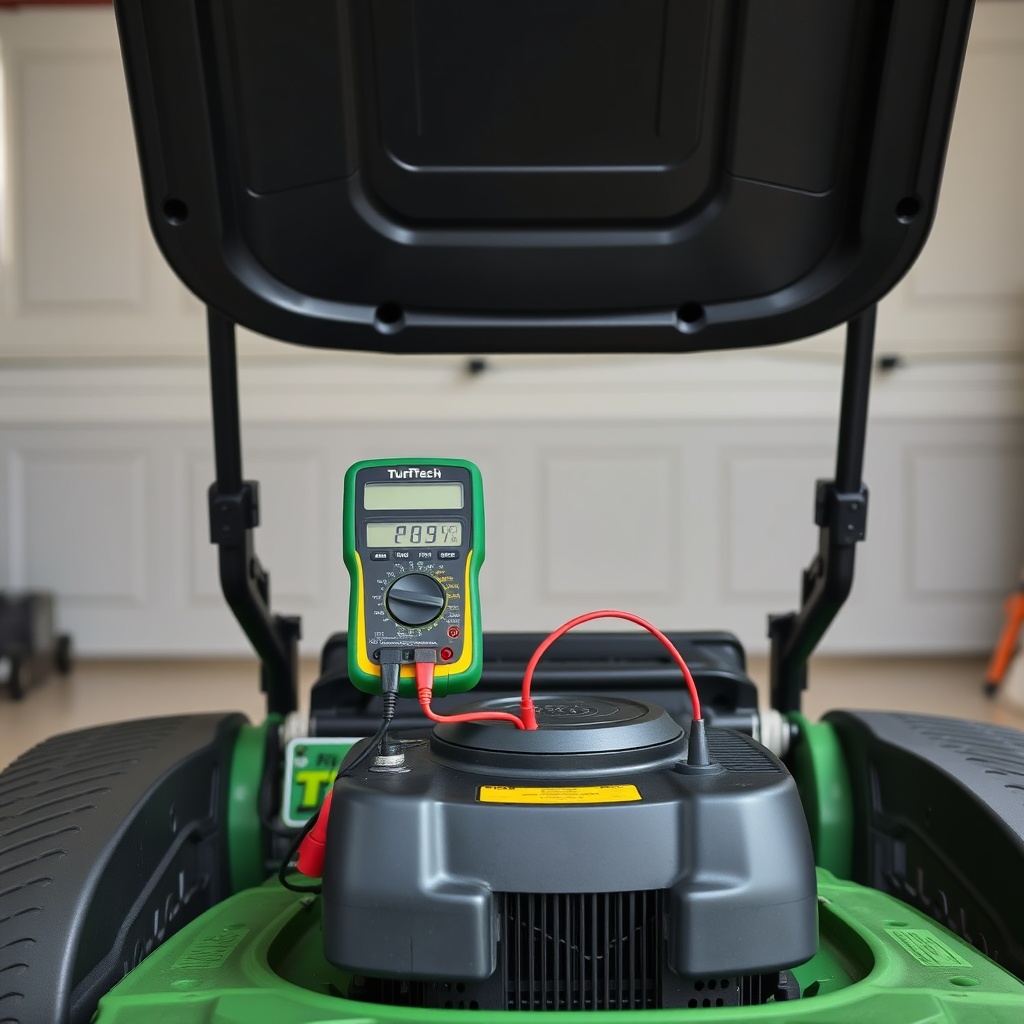
To perform the voltage drain test, you need a digital multimeter (DMM) that can measure DC milliamps (mA) and volts. A clamp meter is not recommended for parasitic draw below 1 amp because its resolution is too coarse. You also need a basic tool set including a 10mm socket or wrench for the battery terminals, penetrating oil for corroded fasteners, and a fuse puller. Set your DMM to DC volts first to verify the battery state—anything below 12.4 volts should be recharged before testing. Then switch to DC milliamps (200mA or 10A range). Insert the red lead into the mA or 10A jack and the black lead into the COM jack. If your meter has a dedicated “parasitic draw” mode, use it. For safety, always connect the meter in series with the negative terminal and the negative cable.
How Do I Perform the Initial Voltage Drop Test Across Fuses?
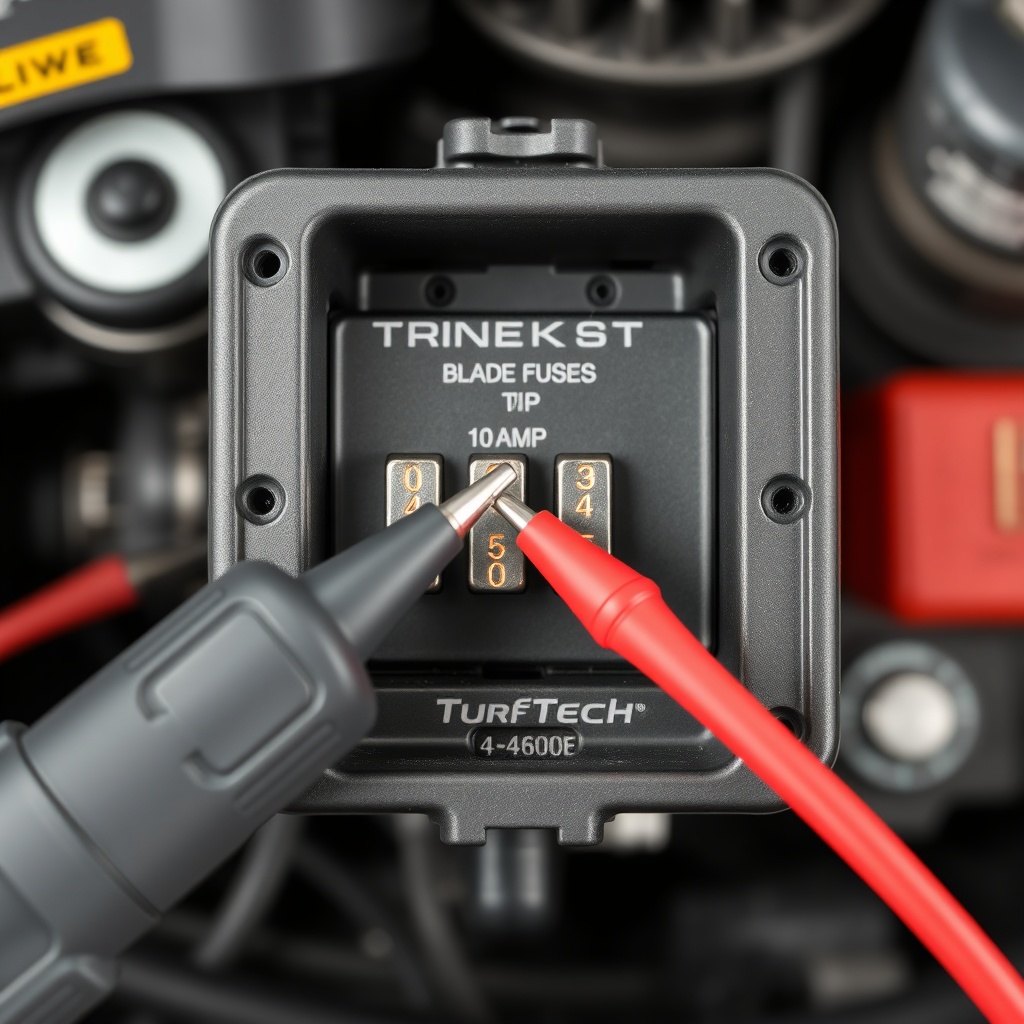
One of the fastest ways to locate the circuit causing the drain is measuring millivolt drops across each fuse in the fuse box. With the meter set to DC millivolts (200mV or 2V range), touch the red probe to one metal tab of a fuse and the black probe to the other tab. A reading of 0.0mV indicates no current flow; any reading above 0.1mV indicates current is passing through that fuse. Below is a guide to interpreting those readings.
| Millivolt Reading (mV) | Current Estimate (Amps) | Severity | Recommended Action |
|---|---|---|---|
| 0.0 – 0.5 | 0 – 0.01 A | Normal (ignition off) | No action needed |
| 0.6 – 2.0 | 0.01 – 0.05 A | Minor draw | Check non‑critical loads |
| 2.1 – 10.0 | 0.05 – 0.25 A | Moderate draw | Investigate module or relay |
| 10.1 – 50.0 | 0.25 – 1.25 A | Severe draw | Possible stuck relay or short |
| Above 50.0 | Above 1.25 A | Critical draw | Battery drain within hours |
Write down the fuse number and its description (e.g., F10 – ECU memory). Focus on fuses showing more than 2.0 millivolts—those indicate the circuit that is staying awake. If you discover a bleed from the ignition circuit, check the TurfTech T-4600E Ignition Coil Testing: Step-by-Step Guide and Tips for coil resistance and shorted winding issues.
How Do I Measure Total Parasitic Current Draw at the Battery?
After identifying suspect fuses, you need to confirm the total draw. Disconnect the negative battery cable from the battery post. Set your multimeter to the 10A DC range. Connect one meter lead to the negative battery post and the other to the disconnected negative cable. Observe the reading—wait 30 seconds for transients. Factory specification for the TurfTech T-4600E is a maximum of 50 mA (0.050 A). A reading of 100 mA or higher indicates a parasitic problem. If the reading spikes and then falls to zero, you may have a module that takes longer to sleep. In that case, disconnect the negative cable and wait. Once you find a reading exceeding 50 mA, start pulling fuses one by one while watching the meter. The moment the reading drops to near zero, you’ve isolated the circuit. For deep memory drains, check the ECU’s keep‑alive circuit. If the draw comes from a module that controls the deck lift, you may benefit from the TurfTech T-4600E Deck Anti-Scalp Wheels: Adjustment Guide for Even Cutting to confirm no wiring chafing near the pivot arms.
What Are the Common Parasitic Draw Sources on the T-4600E?
Based on owner feedback and technical bulletins, the TurfTech T-4600E has three common parasitic draw categories:
- Faulty seat switch or operator presence system: A stuck closed seat switch keeps the control module alive. Unplug the switch connector under the seat and check if the current drops.
- Stuck relay (fuel pump or PTO): A relay that fails to open can continuously power a solenoid or module. Swap the suspect relay with an identical one from a non‑critical circuit like the horn relay.
- Shorted diode in the alternator or voltage regulator: A leaking diode can backfeed through the charging system. Disconnect the two‑pin alternator connector; if draw vanishes, replace the regulator/rectifier.
- Ignition switch leakage: An ignition switch with internal carbon tracking can allow battery voltage to bleed into the RUN circuit. Test the switch contacts with an ohmmeter. For more on ignition system components, see TurfTech T-4600E Spark Plug Replacement: Step-by-Step Guide and Tips and TurfTech T-4600E Ignition Coil Testing: Step-by-Step Guide and Tips.
How Do I Use the Fuse Voltage Drop Test Without Pulling Fuses?
Some owners prefer not to pull fuses repeatedly because they are small and easy to lose. The fuse millivolt drop method described earlier is the non‑invasive alternative. For each fuse, you probe both metal terminals on the top of the fuse without removing it. The meter shows a tiny voltage that corresponds to current flowing through the fuse element. If you get a reading on a fuse labeled “PTO Clutch” or “ECU Main,” that circuit is active. For an accurate reading, the engine must be off and all accessories off. Record the fuse number, its rating, and the millivolt reading. Compare against the table above. For the ECU memory fuse, a reading of 0.2 mV to 1.0 mV is normal. For the PTO clutch fuse, anything above 0.5 mV indicates the clutch solenoid is being energized, which will drain the battery. If you find a drain from the traction drive circuit, see TurfTech T-4600E Traction Drive Belt Tension Adjustment: Step-by-Step Guide to rule out a belt dragging on a wire harness.
What Owners Say About Battery Drain on the T-4600E
In owner forums and direct feedback, the most frequent complaint is waking up to a dead battery after storing the mower for a week. Several owners traced the issue to the “memory seat” feature wiring that chafes against the seat bracket. Others reported that a failing voltage regulator allowed a 200 mA draw that killed the battery overnight. One owner noted that after replacing the seat switch assembly, the draw dropped from 85 mA to 12 mA. Another mentioned that simply cleaning the battery terminal and applying dielectric grease resolved a false parasitic reading caused by terminal corrosion. Overall, the consensus is that the T-4600E is reliable but sensitive to water intrusion in the ECU connector and the relay box under the hood. Several owners also combined a parasitic draw test with a TurfTech T-4600E Carburetor Cleaning: Step-by-Step Guide and Tips as part of a seasonal tune‑up. The solution is almost always a single faulty component—most commonly a relay or a switch—that costs under £25 to replace.
Frequently Asked Questions
1. What is a normal parasitic draw on a TurfTech T-4600E?
A normal parasitic draw is between 20 and 50 milliamps (0.020–0.050 A). Draws above 100 milliamps will drain a fully charged 12‑volt battery in less than 48 hours.
2. Do I need to disconnect the battery before testing?
Yes. To measure current accurately, you must disconnect the negative cable from the battery post and connect the meter in series. Never measure current across a battery post without disconnecting the circuit first.
3. Can a bad spark plug cause a battery drain?
No, a spark plug itself cannot cause a battery drain because it only fires when the engine runs. However, a shorted spark plug wire or a leaking ignition coil can cause an arc that triggers the ignition module to stay awake, creating a small draw. Refer to TurfTech T-4600E Spark Plug Replacement: Step-by-Step Guide and Tips for proper wire routing.
4. How much will a dealer charge to diagnose a parasitic draw?
A professional diagnosis at a TurfTech dealer typically costs between £80 and £150, plus any repair parts. Doing the test yourself with a multimeter costs only the price of the tool—around £25–£60.
5. Can I use a test light instead of a multimeter?
No, a test light draws current itself and will give a false positive. You must use a digital multimeter set to milliamps or a dedicated parasitic draw tester. A test light can also damage sensitive modules in the ECU.
6. Does the T-4600E have a battery management system (BMS)?
The TurfTech T-4600E does not have a full BMS. It relies on the voltage regulator to prevent overcharging. Parasitic draw is not managed by the ECU, so you must test manually.
{
“@context”: “https://schema.org”,
“@type”: “FAQPage”,
“mainEntity”: [
{
“@type”: “Question”,
“name”: “What is a normal parasitic draw on a TurfTech T-4600E?”,
“acceptedAnswer”: {
“@type”: “Answer”,
“text”: “A normal parasitic draw is between 20 and 50 milliamps (0.020–0.050 A). Draws above 100 milliamps will drain a fully charged 12‑volt battery in less than 48 hours.”
}
},
{
“@type”: “Question”,
“name”: “Do I need to disconnect the battery before testing?”,
“acceptedAnswer”: {
“@type”: “Answer”,
“text”: “Yes. To measure current accurately, you must disconnect the negative cable from the battery post and connect the meter in series. Never measure current across a battery post without disconnecting the circuit first.”
}
},
{
“@type”: “Question”,
“name”: “Can a bad spark plug cause a battery drain?”,
“acceptedAnswer”: {
“@type”: “Answer”,
“text”: “No, a spark plug itself cannot cause a battery drain because it only fires when the engine runs. However, a shorted spark plug wire or a leaking ignition coil can cause an arc that triggers the ignition module to stay awake, creating a small draw.”
}
},
{
“@type”: “Question”,
“name”: “How much will a dealer charge to diagnose a parasitic draw?”,
“acceptedAnswer”: {
“@type”: “Answer”,
“text”: “A professional diagnosis at a TurfTech dealer typically costs between £80 and £150, plus any repair parts. Doing the test yourself with a multimeter costs only the price of the tool—around £25–£60.”
}
},
{
“@type”: “Question”,
“name”: “Can I use a test light instead of a multimeter?”,
“acceptedAnswer”: {
“@type”: “Answer”,
“text”: “No, a test light draws current itself and will give a false positive. You must use a digital multimeter set to milliamps or a dedicated parasitic draw tester. A test light can also damage sensitive modules in the ECU.”
}
},
{
“@type”: “Question”,
“name”: “Does the T-4600E have a battery management system (BMS)?”,
“acceptedAnswer”: {
“@type”: “Answer”,
“text”: “The TurfTech T-4600E does not have a full BMS. It relies on the voltage regulator to prevent overcharging. Parasitic draw is not managed by the ECU, so you must test manually.”
}
}
]
}