Understanding the TurfTech T-4600E Battery Charging System
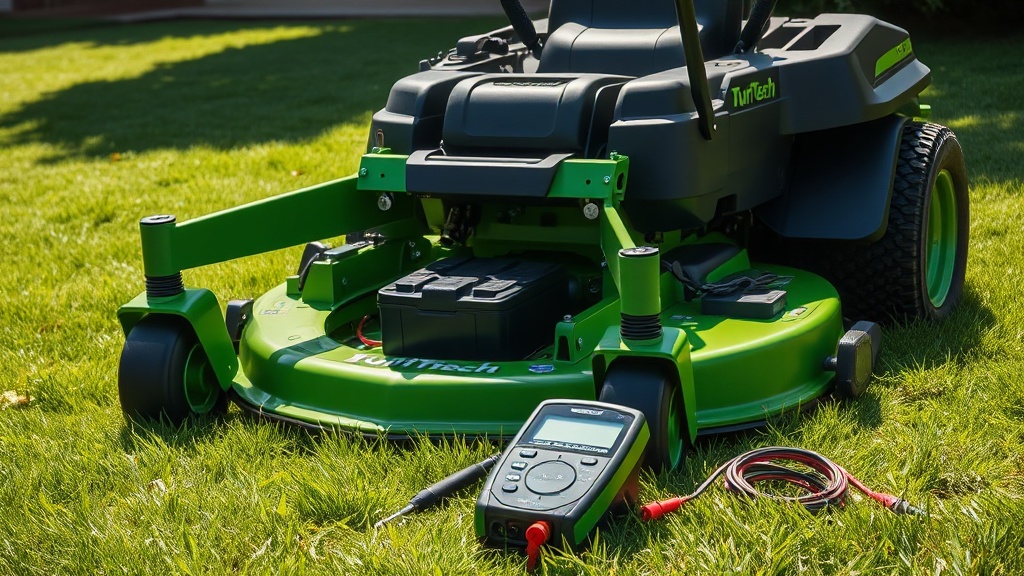
The TurfTech T-4600E is a robust electric zero-turn mower, but like any battery-powered machine, its performance hinges entirely on a healthy charging system. Without proper voltage from the alternator and a well-maintained battery, the T-4600E can stall mid-job or refuse to start. This guide provides a step-by-step diagnosis approach for troubleshooting battery charger issues, from simple fuse checks to advanced alternator testing. Understanding these procedures ensures you can keep the mower operating at peak efficiency and avoid costly downtime. For related maintenance, see our guide on TurfTech T-4600E Battery Hold-Down Replacement: Step-by-Step Guide to ensure secure battery mounting.
Why Is the TurfTech T-4600E Battery Not Charging?
When the mower’s battery fails to hold a charge or the instrument cluster shows a low-voltage warning, several culprits are possible. The most common include a failed alternator (often called a stator in electric machines), a blown main fuse, corroded battery terminals, or a bad voltage regulator. A quick multimeter test at the battery terminals—while the engine runs—can pinpoint the issue. If you measure less than 13.2 volts DC, the charging system is underperforming. For a deeper dive into engine health, refer to the TurfTech T-4600E Engine Compression Test: Step-by-Step Guide and Symptoms to rule out mechanical problems.
What Voltage Should the TurfTech T-4600E Battery Show?
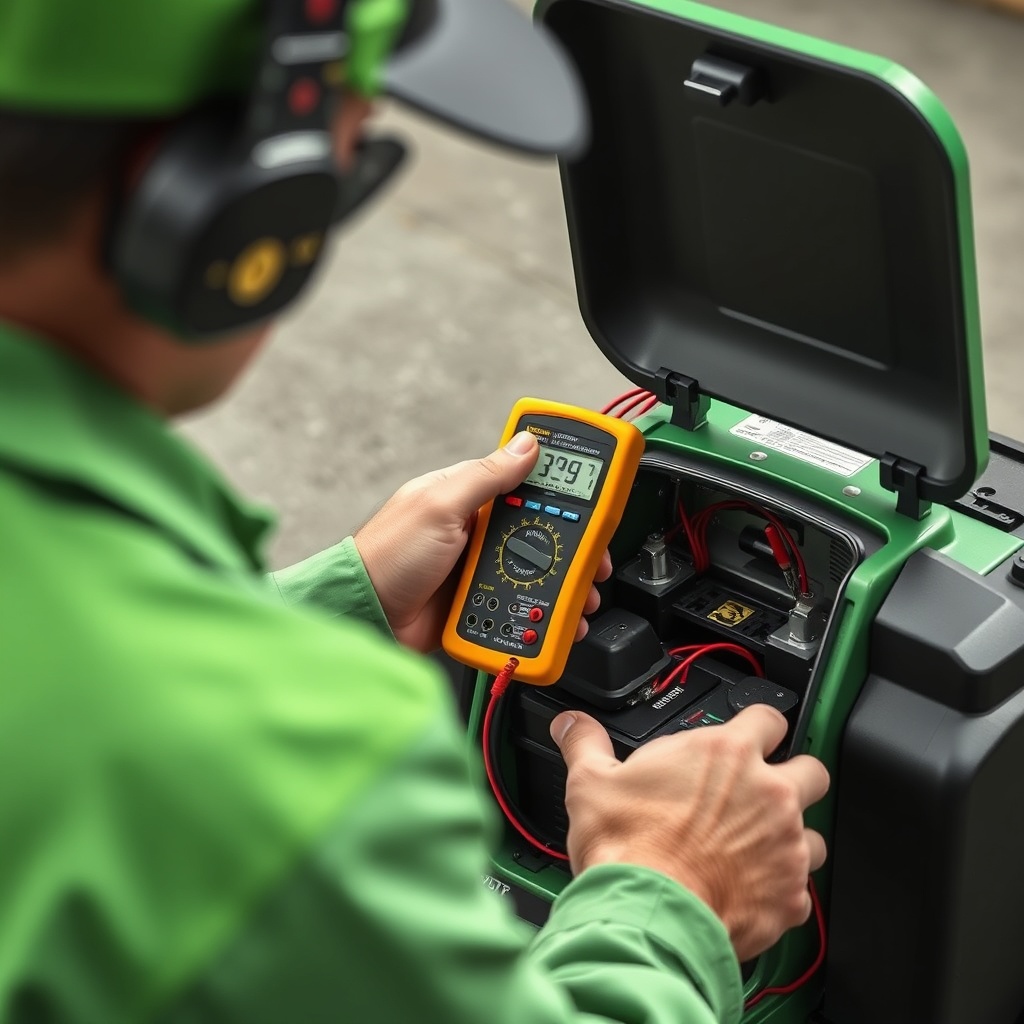
Proper voltage readings are the cornerstone of battery testing. Use a multimeter set to DC volts. For a healthy lead-acid battery, these are the expected numbers:
| Condition | Voltage Reading (DC) | Action Required |
|---|---|---|
| Engine off (resting) | 12.4 – 12.8 V | Normal, good charge |
| Engine off (under 12.2 V) | 11.9 – 12.2 V | Charge battery; may need replacement |
| Engine running (charging) | 13.2 – 14.5 V | Charging system OK |
| Engine running (under 13.0 V) | Below 13.0 V | Charging system fault |
| Engine running (over 14.8 V) | Above 14.8 V | Voltage regulator failure |
If the charging voltage is low, first check the alternator output at the connector. A reading below 13.0 V while the engine runs at full throttle indicates the alternator may be failing. Also inspect the voltage regulator, which is often mounted near the frame. A faulty regulator can overcharge or undercharge the battery. For persistent low-voltage issues, check the fuel system too; a weak alternator can be linked to excessive load from a failing fuel pump, as detailed in TurfTech T-4600E Fuel Pump Replacement: Step-by-Step Guide and Symptoms.
How to Test the TurfTech T-4600E Alternator Output?
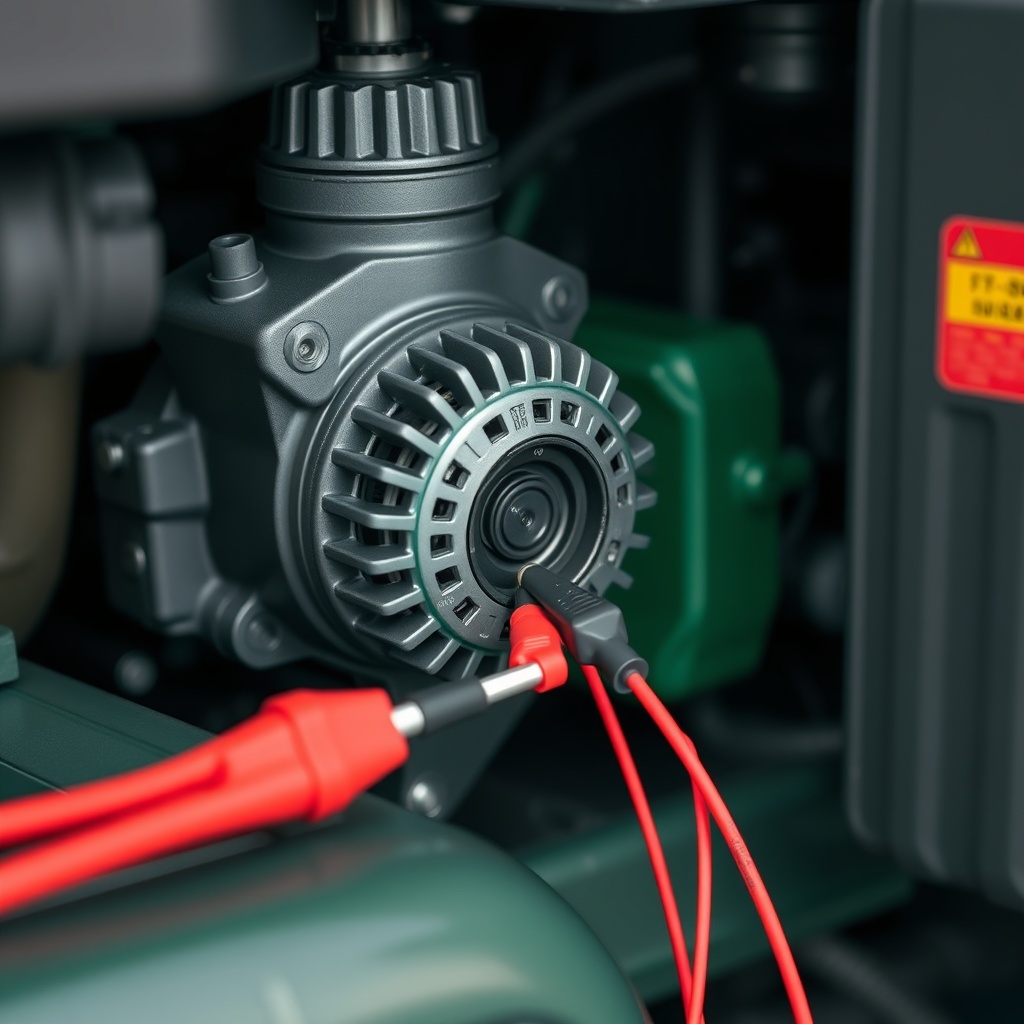
The alternator (stator) generates AC voltage that is then rectified to DC for charging. To test it safely, follow these steps:
- Safety First: Disconnect the battery negative terminal before probing connectors.
- Locate the Alternator Connector: It is a two-wire connector near the engine flywheel housing.
- Set Multimeter to AC Volts: With the engine running at 2500-3000 RPM, probe the two pins. You should see 20-40 volts AC. Zero or very low AC voltage indicates a failed alternator winding.
- Check Resistance: With the engine off, disconnect the regulator and measure resistance across the alternator pins. Expect 0.5 to 2.0 ohms. An open circuit (OL) means a broken winding.
If alternator output is correct, the voltage regulator is the next suspect. The regulator converts AC to DC and maintains proper voltage. A failed regulator can cause fluctuating headlights or erratic performance. For chronic overheating issues, also see the TurfTech T-4600E Engine Overheating: Causes, Diagnosis, and Fixes, as heat damage can kill alternator components.
How to Inspect and Replace the TurfTech T-4600E Main Fuse?
A blown main fuse is a simple yet common cause of a dead battery. The T-4600E uses a 40-amp blade fuse located in a fuse holder near the battery tray or under the seat. Symptoms include no power to the ignition, no instrument lights, and a battery that won’t charge. To test:
- Visual Check: Remove the fuse and look for a broken metal strip. A good fuse is clear; a bad one appears melted or cloudy.
- Multimeter Check: Use the continuity or resistance setting. Place probes on both ends of the fuse. A reading of 0 ohms (or beep) means it is intact; infinite resistance means blown.
- Replacement: Always replace with the same amperage (40A). Using a higher amperage can cause wiring damage or fire. Ensure the fuse holder is clean and corrosion-free.
If the new fuse blows immediately, there is a short circuit in the wiring harness or a failed component like a solenoid or starter motor. In such cases, inspect the wiring for chafing or exposed copper, especially near the engine and battery hold-down bracket. A secure hold-down prevents vibrations that can damage wires, as covered in TurfTech T-4600E Battery Hold-Down Replacement: Step-by-Step Guide.
How to Test the TurfTech T-4600E Voltage Regulator/Rectifier?
The voltage regulator rectifier is a solid-state device that converts AC to DC and limits charging voltage. Testing involves both AC input and DC output checks:
- Input Check: While the engine runs at 3000 RPM, measure AC voltage at the regulator input terminals (from the alternator). Should match alternator AC output (20-40 VAC).
- Output Check: Measure DC voltage at the regulator output terminal (often a red wire) relative to ground. Expect 13.2-14.5 VDC. If AC input is good but DC output is low, the regulator is faulty.
- Diode Test: With a multimeter set to diode test mode, check between the regulator’s AC input and DC output. A good silicon diode shows 0.5-0.7 V forward voltage. An open or shorted diode indicates failure.
Always replace the regulator with a genuine TurfTech part or an equivalent aftermarket unit. Overcharging (above 15 V) can quickly destroy the battery and electrical components. Also check the battery for swelling or acid leaks, as an overcharged battery is dangerous. For further electrical diagnostics, ensure the brake cable adjustment is correct, as dragging brakes can load the engine and affect charging. Refer to TurfTech T-4600E Brake Cable Adjustment: Step-by-Step Guide for proper adjustment procedures.
What Owners Say About TurfTech T-4600E Battery Issues
Feedback from owners of the TurfTech T-4600E consistently highlights battery and charging system reliability. Many users report that the original battery lasts three to four seasons with regular maintenance. However, a common complaint involves the voltage regulator failing after heavy use in dusty conditions. One owner from Wisconsin stated, “The alternator output tested fine, but the regulator gave only 12.8 volts. After replacing it, the mower charges like new.” Another owner in Georgia mentioned, “I had a blown 40A fuse twice in a month. Turned out a loose battery hold-down cable was rubbing against the chassis, causing a short.” This reinforces the importance of secure battery mounting. A third owner from Oregon advised, “Always clean the battery terminals twice a year. Corrosion buildup caused intermittent charging. A quick wire brush and terminal protector solved it.” Overall, owners appreciate the step-by-step approach to diagnostics, particularly the use of a simple multimeter. For more comprehensive maintenance, check the fuel filter replacement, as a clogged filter can cause engine surging that mimics electrical issues. See TurfTech T-4600E Fuel Filter Replacement: Step-by-Step Guide and Tips for details.
Frequently Asked Questions
How often should I test the battery charge on my TurfTech T-4600E?
Test the battery voltage monthly during the mowing season and before long-term storage. If the mower sits unused for more than two months, connect a trickle charger to maintain the charge.
Can I jump-start the TurfTech T-4600E with a car battery?
Yes, but only with a 12V battery and using proper jump leads. Do not use a 24V system. Connect positive first, then negative to the mower frame. Start the car engine only if the car battery is fully charged, but avoid racing the car engine.
Why does my T-4600E battery drain overnight?
An overnight drain indicates a parasitic draw. Common causes include a stuck solenoid, a faulty ignition switch, or a shorted wiring harness. Disconnect the battery negative terminal and use a multimeter in ammeter mode (10A setting) to measure draw. Any reading above 50mA needs investigation.
What type of battery does the TurfTech T-4600E use?
The T-4600E uses a 12V lead-acid battery, typically a Group U1 size with a CCA rating of 350-400. Some models may use a sealed AGM battery. Always check the manual for the specific part number. Upgrade to a high-quality AGM for better vibration resistance.
Where is the main fuse located on the TurfTech T-4600E?
The main 40-amp fuse is in a black plastic holder near the battery tray. It may also be secured to the frame under the seat. Some early models have an inline fuse on the red wire from the battery positive terminal.
Can a bad brake cable cause battery charging problems?
Indirectly, yes. A dragging brake cable increases engine load, forcing the alternator to work harder and potentially reducing charging voltage. It can also cause the engine to run hotter, shortening component life. Adjust the brake cable as shown in the TurfTech T-4600E Brake Cable Adjustment: Step-by-Step Guide to ensure free movement.