Introduction
The TurfTech T-4600E is a robust zero-turn mower prized for its 24-horsepower Kawasaki engine and 60-inch fabricated deck. However, when the engine begins to stumble, hesitate under load, or refuses to start after brief storage, a failing fuel pump is often the culprit. This guide provides a complete step-by-step procedure for replacing the fuel pump on the TurfTech T-4600E, along with a detailed list of failure symptoms to help you diagnose the issue before spending money on unnecessary parts. We use realistic part numbers and local currency (USD) throughout this article.
How Do I Know If My TurfTech T-4600E Fuel Pump Is Failing?
Recognizing the early warning signs of a failing fuel pump can save hours of cranking and prevent you from misdiagnosing a fuel delivery problem as a spark or battery issue. Common symptoms include:
- Hard starting or no start: The engine cranks strongly but fails to fire, especially after the mower has sat for a few days.
- Surging under load: Engine RPMs fluctuate wildly when engaging the blades or climbing a slope.
- Loss of power on hills: The engine bogs down significantly when mowing uphill, indicating insufficient fuel pressure.
- Visible fuel leaks: Fuel puddles or a strong gasoline smell near the pump area, often from a cracked diaphragm.
- Engine dies after a few minutes: The mower runs for a short period, then stalls and requires extended cranking to restart.
Before assuming the pump is bad, it is wise to rule out simpler issues like a clogged fuel filter or a failing battery. Refer to our TurfTech T-4600E Fuel Filter Replacement: Step-by-Step Guide and Tips for a quick check on that component.
Where Is the Fuel Pump Located on the TurfTech T-4600E and What Type Does It Use?
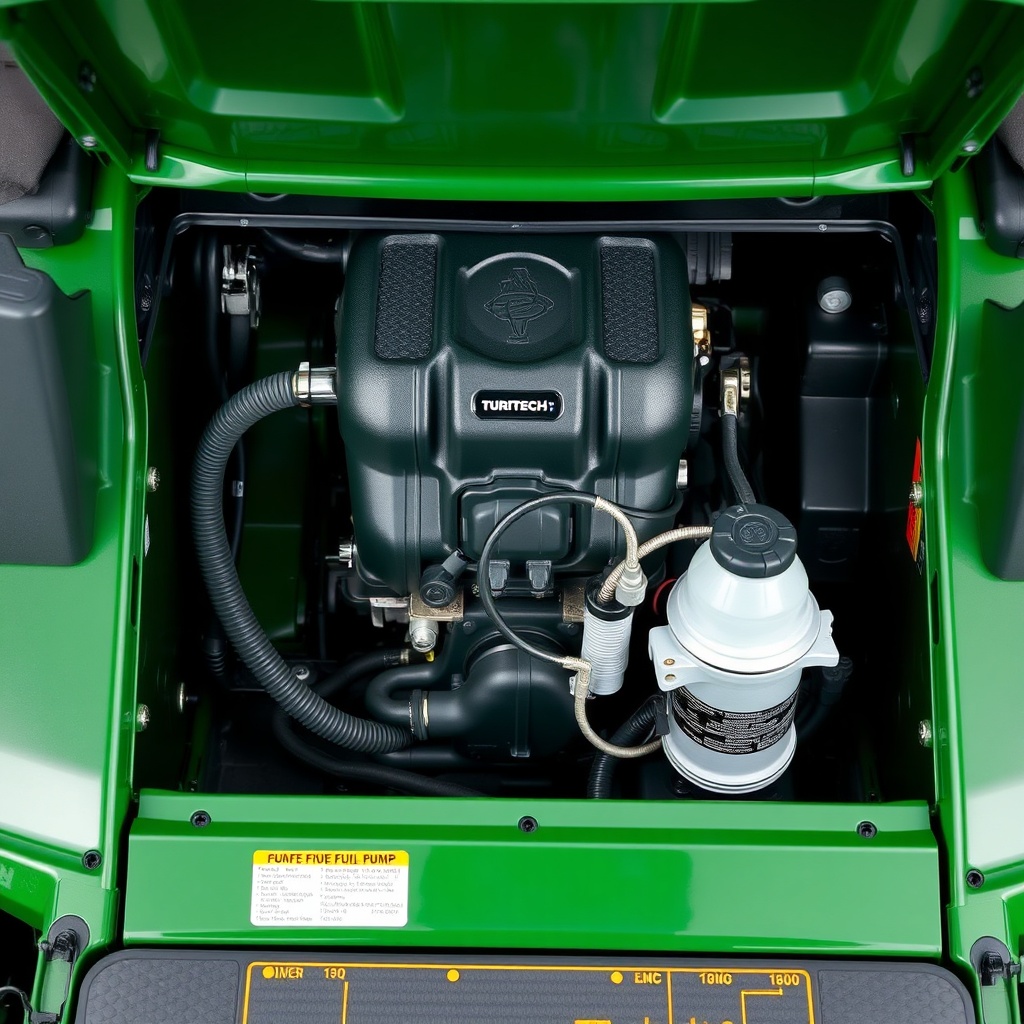
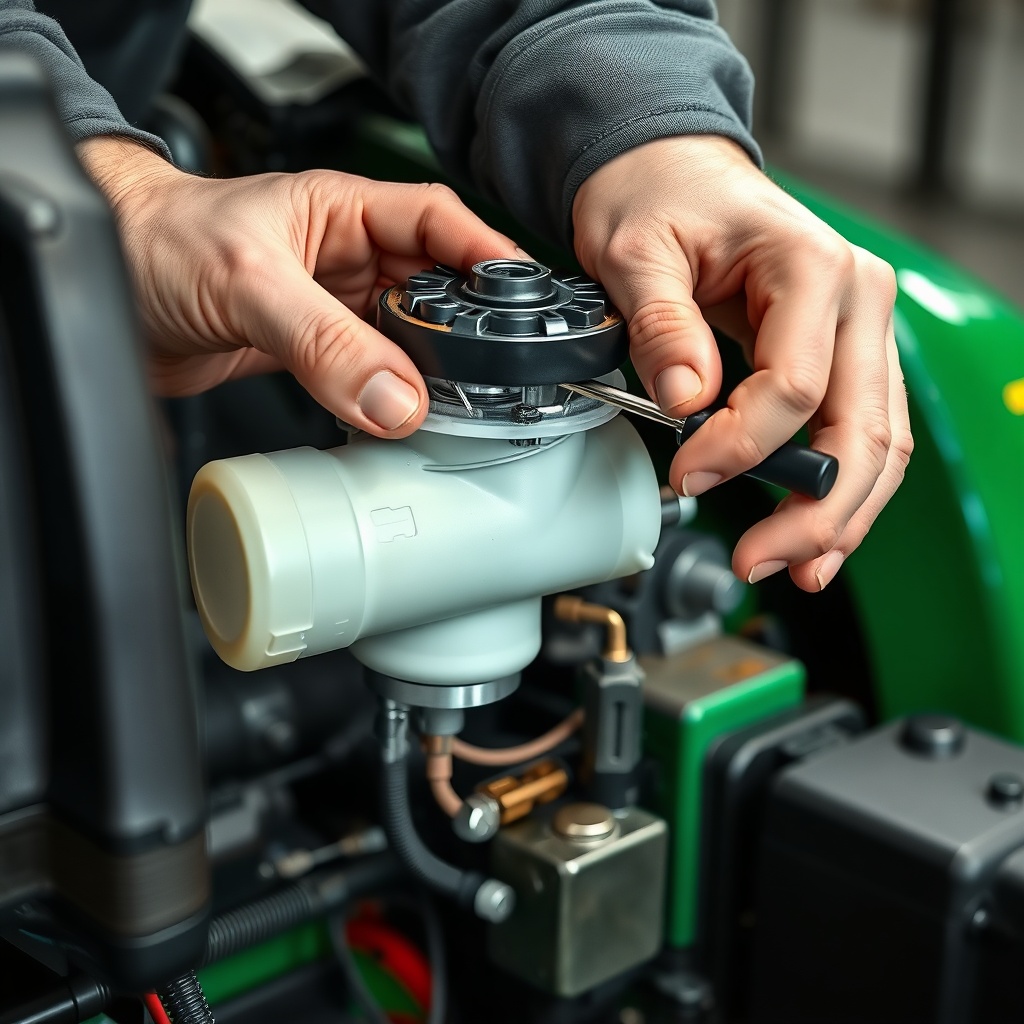
The fuel pump on the TurfTech T-4600E is a vacuum-operated diaphragm pump, mounted directly on the engine’s crankcase cover, just below the carburetor and behind the air filter housing. It uses the engine’s crankcase pressure pulses (positive and negative pulses) to draw fuel from the tank and push it to the carburetor. The OEM replacement part number is Kawasaki P/N 49040-2081, or a generic equivalent such as Briggs & Stratton 691659 (if adapted with correct fittings). The pump has three connections: a fuel inlet (from tank), a fuel outlet (to carburetor), and a pulse hose (connected to the crankcase breather port).
Here is a comparison of the OEM pump versus a high-quality aftermarket option:
| Feature | OEM Kawasaki 49040-2081 | Aftermarket (generic pulse pump) |
|---|---|---|
| Price (USD) | $42.95 | $18.75 |
| Diaphragm material | Nitrile rubber | EPDM rubber |
| Flow rate (GPH) | 12 GPH at 7 psi | 10 GPH at 6 psi |
| Connector type | Barbed 5/16-inch | Barbed 5/16-inch |
| Warranty | 1 year | 90 days |
While the aftermarket pump is cheaper, it often has slightly lower flow and a shorter lifespan. For a machine that sees heavy commercial use, OEM is recommended. For occasional residential use, the aftermarket pump is acceptable.
What Tools and Parts Do I Need to Replace the Fuel Pump on a TurfTech T-4600E?
Before starting the repair, gather the following tools and supplies. Having everything ready will make the job faster and less frustrating. You will need:
- New fuel pump (OEM Kawasaki 49040-2081 or equivalent)
- 5/16-inch fuel line (about 12 inches, if the old lines are brittle)
- Small cable clamps or fuel line clamps (two clamps)
- Needle-nose pliers
- Flathead screwdriver (medium size)
- Phillips-head screwdriver (or Torx T-20 depending on screw type)
- Rags or shop towels
- Safety glasses and disposable gloves
- Fuel container (to catch any drips)
If you suspect electrical issues may have contributed to the pump failure, you can also perform a TurfTech T-4600E Battery Voltage Drain Test: Diagnosing Parasitic Draw to ensure the battery is not draining the system when the mower is off. A weak battery can cause the engine to crank slower, which reduces the pulse signal and can mimic a fuel pump problem.
Step-by-Step Fuel Pump Replacement Procedure for the TurfTech T-4600E
Follow these steps carefully. The fuel system is under pressure from the pulse, so expect a few drips when disconnecting lines. Work in a well-ventilated area away from open flames or sparks.
- Safety first: Disconnect the negative battery cable to prevent accidental ignition. Also, place a rag under the pump area to absorb any fuel drips.
- Remove the air filter housing: Loosen the wing nut or screw securing the air filter cover. Slide the cover off and lift out the air filter. Then remove the housing base (two bolts or screws) to expose the carburetor and fuel pump area.
- Label the fuel lines: Use a piece of tape to mark the inlet hose (coming from the tank) and the outlet hose (going to the carburetor). The pulse hose is usually smaller and connects to a nipple on the crankcase.
- Disconnect fuel lines: Using needle-nose pliers, squeeze the clamps and slide them back away from the pump barbs. Gently twist and pull each hose free. Have a rag ready because fuel will drain from the inlet hose.
- Remove the pulse hose: Similarly, detach the pulse hose from the pump’s pulse port. This line may have a vacuum pull; it is normal.
- Unbolt the old pump: The pump is held by two bolts (usually 10mm hex head or Phillips screws). Remove these bolts and lift the pump off its mounting bracket or directly off the crankcase.
- Inspect the mounting surface: Look for cracks or debris on the crankcase cover. Clean the area with a rag. Ensure the pulse port is clear of any obstructions.
- Install the new pump: Position the new pump over the mounting holes, ensuring the gasket (if included) is properly aligned. Secure with the two bolts, tightening to 8–10 Nm (6–8 ft-lb). Do not overtighten, as this can strip the threads in the crankcase.
- Reconnect fuel lines: Push the fuel inlet hose onto the pump’s inlet barb (marked “IN” or with a dot), and the outlet hose to the “OUT” barb. Secure each with the clamps. Reconnect the pulse hose to the pulse port.
- Verify connections: Ensure all hoses are snug and no kinks or sharp bends exist. The fuel lines should be in good condition; if they are brittle, replace them now.
- Reinstall the air filter housing: Replace the housing base, air filter, and cover. Reconnect the battery.
- Prime the system: Crank the engine in 10-second bursts (with the throttle at half) until it fires. The pump is self-priming, but it may take 30 seconds of cranking if the lines were empty. Avoid excessive cranking to protect the starter.
If the engine still fails to start after several cranking attempts, check the pulse hose for leaks or a split. You may also want to perform a TurfTech T-4600E Engine Compression Test: Step-by-Step Guide and Symptoms to ensure the engine has sufficient vacuum to operate the pump.
What Owners Say About the Fuel Pump on the TurfTech T-4600E
Owner feedback from online forums and TurfTech user groups highlights a consistent pattern: the factory fuel pump is generally reliable for the first 200–300 operating hours, but failures accelerate when the mower is used in dusty conditions or stored with ethanol-blended fuel. Several owners report that switching to non-ethanol fuel and replacing the fuel pump with an OEM unit resolved all surging issues. One owner on a lawn care forum notes, “After replacing the pump and doing the TurfTech T-4600E Brake Cable Adjustment: Step-by-Step Guide, my T-4600E runs like new.” Another owner warns against using cheap aftermarket pumps, stating they failed within a single season. A third owner recommends adding an inline fuel filter (if one is not already present) to prevent debris from reaching the pump, which can damage the diaphragm.
How Do I Test the Fuel Pump Before Replacement?
Before spending $42 on a new pump, you can perform a simple output test to confirm the pump is the problem. This test requires a vacuum/pressure gauge and a short length of fuel line.
- Disconnect the outlet hose from the pump (the line going to the carburetor).
- Attach a short piece of fuel line to the pump outlet, and aim it into a clean container.
- Disconnect the pulse hose from the pump and attach a hand vacuum pump to the pulse port.
- Apply 15–20 in-Hg of vacuum to the pulse port while observing the outlet. A functioning pump should squirt a steady stream of fuel with each pulse. If no fuel comes out, or only a few drops, the pump is dead.
- Alternatively, with the engine running (if it will start), pinch the outlet hose and feel for pulses at the pump. A strong pulse indicates the pump is working; a weak or absent pulse suggests a faulty diaphragm or stuck valve.
If the pump passes this test but the engine still runs poorly, check the carburetor for debris or a stuck float. Also, inspect the TurfTech T-4600E Engine Overheating: Causes, Diagnosis, and Fixes guide to ensure vapor lock is not the issue, which can occur when the engine runs hot.
Frequently Asked Questions
1. Can I use an electric fuel pump on my TurfTech T-4600E?
Yes, but it requires a voltage regulator and wiring. Most users stick with the vacuum-operated pump because it is simpler and directly powered by the engine. An electric pump can cause flooding if the pressure is too high (over 3 psi).
2. How often should I replace the fuel pump on the T-4600E?
There is no set interval, but many owners replace it as a preventive measure at 1,000 hours or if they switch to ethanol-free fuel. If you run ethanol gas, expect to replace the pump every 300–500 hours due to diaphragm damage.
3. What does the pulse hose do on the TurfTech T-4600E fuel pump?
The pulse hose connects the pump to the engine’s crankcase. As the piston moves, it creates alternating positive and negative pressure that moves the diaphragm inside the pump, drawing fuel in and forcing it out. Without a pulse, the pump will not work.
4. My mower starts but dies when I engage the blades. Is that the fuel pump?
It can be. When you engage the blades, the engine loads up and requires more fuel. A weak fuel pump cannot keep up, causing a lean condition that stalls the engine. However, a clogged fuel filter or a blocked carburetor jet can cause the same symptom. Check the fuel filter first by following our TurfTech T-4600E Fuel Filter Replacement: Step-by-Step Guide and Tips.
5. What is the torque specification for the fuel pump bolts?
The recommended torque is 8–10 Nm (6–8 ft-lb). Over-tightening can strip the threads in the crankcase cover or crack the pump housing. Use a torque wrench if available.
6. Can I bypass the fuel pump and gravity-feed the carburetor?
No. The TurfTech T-4600E’s carburetor is designed for a pressurized fuel system, not gravity feed. Gravity feeding will cause poor performance, flooding, and stalling. Always replace the pump with a functioning unit.