Introduction
The TurfTech T-4600E is a robust rear-engine rider favored by homeowners with half-acre to two-acre lots, yet its self-propelled drive system—the primary transmission linking the engine to the wheels—can present distinct traction-related failures. Owners frequently report instances where the mower refuses to move forward, pulls hard to one side, or emits grinding noises from the transaxle area. This article isolates the most prevalent drive-traction issues on the T-4600E, offers systematic troubleshooting steps, and provides cost-effective fixes using standard hand tools and commonly available replacement parts.
Why Does My TurfTech T-4600E Move in Reverse but Not Forward?
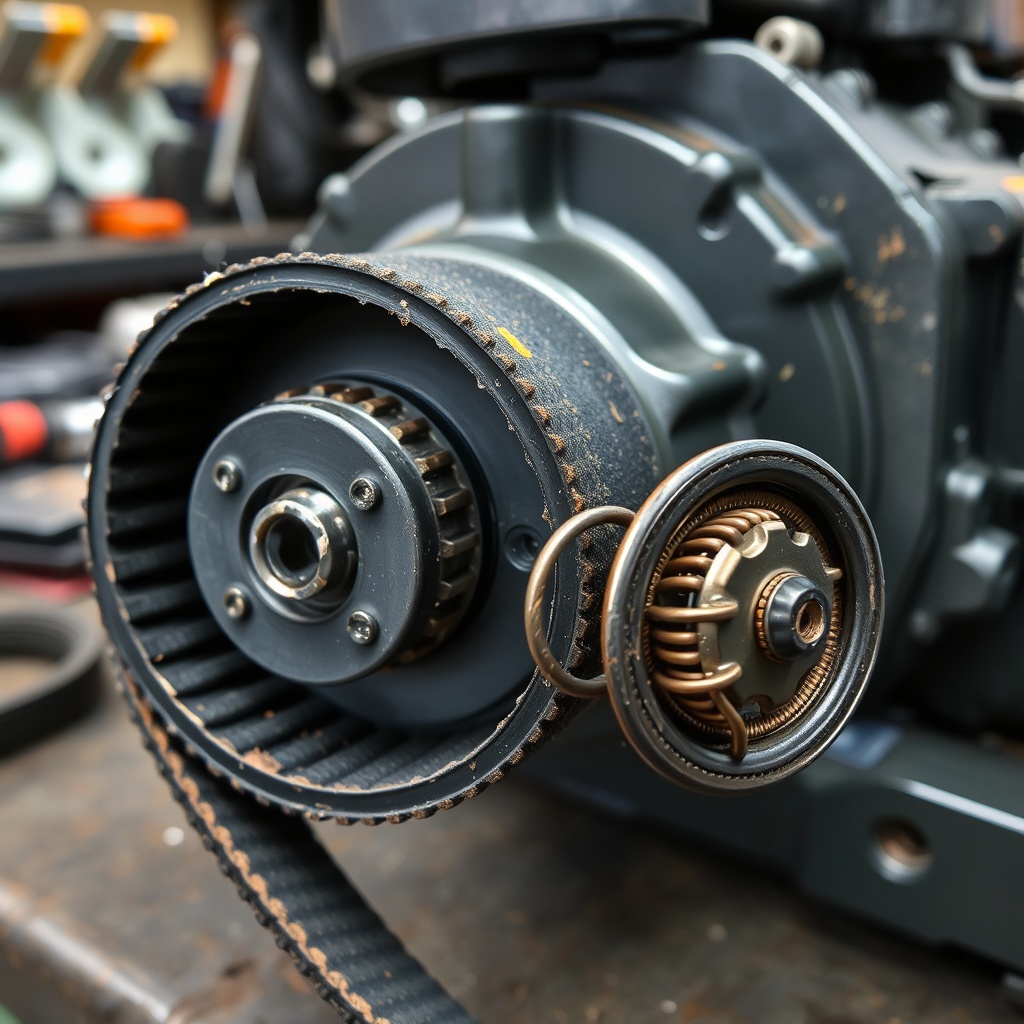
This symptom points directly to a worn or broken drive belt inside the self-propelled transmission housing. The T-4600E uses a single continuous belt to drive both forward and reverse clutches; if the belt’s tensioning spring has stretched or the belt itself has glazed, forward traction fails first because that direction typically demands greater belt bite. Inspect the belt by removing the belt guard (three 5/16-inch bolts) and looking for frayed edges or a shiny glazed surface. If the belt measures less than ⅜ inch wide at any point, replace it immediately. A new OEM belt (part no. TT-4600E-BLT) costs approximately $24.99 at local dealers. While the guard is off, check the idler pulley spring—if it measures less than 2.5 inches free length, swap it for a $6.75 replacement.
If the belt appears fine, the issue may be a seized forward clutch pulley. The T-4600E’s transmission uses a centrifugal clutch that engages via pulley movement. Remove the transmission cover (six ½-inch bolts) and spray the clutch pivot points with a penetrating lubricant (e.g., WD-40 Specialist). Manually rotate the forward clutch arm—it should move freely. A replacement clutch assembly runs roughly $55.00. For a visual guide on engine-to-belt alignment, refer to our TurfTech T-4600E OHV Engine: Common Problems and Troubleshooting Tips article.
What Causes the T-4600E to Pull Hard to One Side While Mowing?
Uneven traction or a dragging brake on one rear wheel often causes lateral pull. On the T-4600E, each rear wheel has an independent drum brake controlled by a lever under the seat. If one brake cable has stretched or the brake pad has worn down to less than 1/16 inch, that wheel will drag, making the mower steer toward the dragging side. Adjust the brake cable by turning the hex nut at the lever end until there is 1/8-inch free play before the brake engages. Brake pad replacement kits cost $12.50 per side.
Another common cause is tire pressure differential. The T-4600E requires 12 psi in the rear tires (18×8.50-8 turf) and 10 psi in the front (15×6.00-6). A pressure difference of just 2 psi between rear tires can produce a noticeable pull. Use an accurate tire gauge and fill both rear tires to 12 psi. If the pull persists, inspect the transaxle’s differential gear—remove the transaxle drain plug (hex key) and look for metal shavings on the magnetic plug. Shavings suggest internal gear damage, which may require a transaxle rebuild kit ($89.00) or a complete exchange unit ($210.00).
How Do I Diagnose Grinding Noises from the Transaxle?
Grinding typically indicates failing wheel bearings or a damaged ring-and-pinion gear inside the transaxle. Begin by raising the rear of the mower on jack stands and spinning each rear wheel by hand. A rough or gritty feel suggests a bad bearing. Replace the wheel bearing and seal set (part no. TT-4600E-WB) for $18.25 per side. If both wheels spin smoothly, the noise likely comes from the transaxle itself. Drain the transaxle oil (SAE 80W-90 gear oil, 1.5 quarts) and refill with fresh oil—contaminated oil can cause chatter. A full drain-and-refill costs less than $10.00.
For persistent grinding, remove the transaxle from the mower (four mounting bolts and disconnect the drive belt) and inspect the ring gear teeth. If any tooth is chipped or broken, you’ll need a ring-and-pinion set ($44.00). This is a moderately complex job requiring a bearing puller and press; many owners opt for a replacement transaxle assembly for $210.00. Before tearing down the transaxle, rule out a loose blade drive belt whipping against the deck—check our TurfTech T-4600E Blade Balance Issues: Diagnosis and Fix guide, as unbalanced blades can mimic transmission noise.
What Should I Do When the Self-Propelled Drive Engages Only Intermittently?
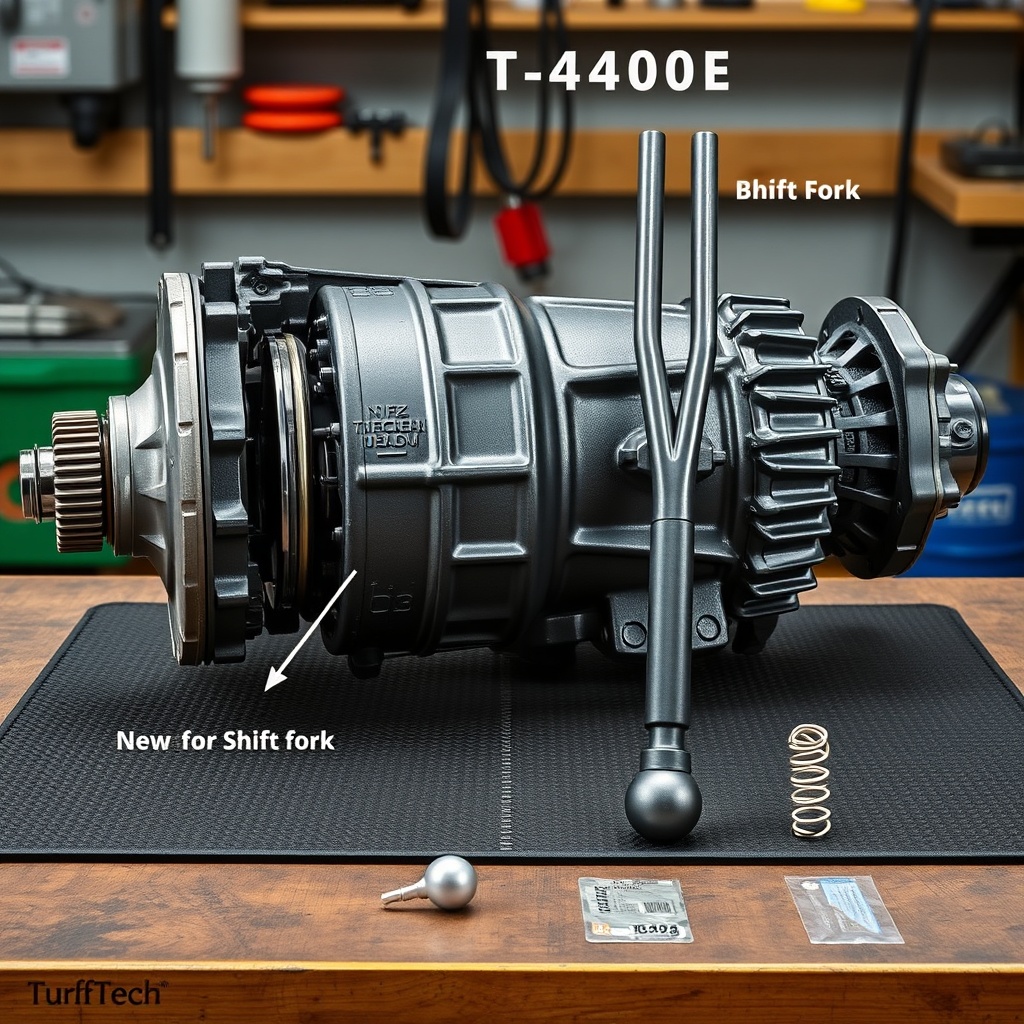
Intermittent engagement often traces back to a worn engagement lever pivot or a loose cable at the control lever. Over time, the plastic bushing at the pivot point on the left-hand lever becomes oval-shaped, allowing slop. Replace the bushing kit (part no. TT-4600E-BUSH, $5.50) and tighten the cable clamp at the lever. Adjust the cable so that when the lever is fully forward, the transaxle shift fork is fully seated in forward gear. The cable should have no more than 1/8-inch slack at the transaxle connection.
If mechanical adjustments don’t solve it, the transaxle shift fork itself may be bent. This component controls which gear set (forward or reverse) is engaged. Remove the transaxle top cover (four bolts) and inspect the fork’s arms—they should be parallel and equally spaced from the gear. A bent fork (common after hard impacts or running over large sticks) costs $14.50 to replace. Also check the spring-loaded detent ball that holds the fork in gear; if the ball is missing or the spring is weak, the fork can slip out of engagement. A detent kit (ball and spring) runs $8.00.
Why Does the T-4600E Move Slower in Forward Gear Than Normal?
Reduced forward speed without a change in engine rpm usually points to a slipping belt or a failing hydraulic bypass valve in the transaxle. First, check the belt tension: with the engine off, depress the belt tensioner arm—it should move about ⅜ inch before the belt tightens. If it moves more than ½ inch, the tensioner spring is weak (replace spring, $6.75). Next, inspect the belt for oil contamination (a shiny, greasy surface). Clean the belt and pulleys with brake cleaner if oily; an oil-soaked belt must be replaced ($24.99).
If the belt is sound, the hydraulic bypass valve (located on top of the transaxle) may be partially open, bleeding off hydraulic pressure and reducing speed. Locate the bypass lever (a small metal tab near the transaxle oil fill plug) and ensure it is fully pushed in to “run” position. A stuck bypass valve can be freed by cycling it several times while the engine runs at half throttle. For persistent issues, flush the transaxle by draining old oil, filling with clean 80W-90, running for two minutes, and then draining again before refilling with fresh oil. This process costs about $12.00 in oil but often restores proper speed. Also verify the mower deck’s anti-scalp rollers are set correctly—improper deck height can create extra drag. Our TurfTech T-4600E Deck Leveling: Step-by-Step Adjustment Guide provides exact roller settings.
Troubleshooting the Self-Propelled System: Severity & Cost Table
| Issue | Severity (1-5) | Typical Repair Cost (USD) | Time to Fix |
|---|---|---|---|
| Worn drive belt | 3 | $24.99 | 30 minutes |
| Seized forward clutch pulley | 4 | $55.00 | 1.5 hours |
| Dragging brake (adjustment) | 2 | $0 | 15 minutes |
| Dragging brake (pad replacement) | 2 | $12.50 | 30 minutes |
| Tire pressure imbalance | 1 | $0 | 5 minutes |
| Bent shift fork | 4 | $14.50 | 2 hours |
| Damaged ring/pinion gear | 5 | $44.00 – $210.00 | 3–5 hours |
| Wheel bearing | 3 | $18.25 | 1 hour |
| Hydraulic bypass valve stuck | 2 | $0 | 10 minutes |
What Owners Say About the T-4600E’s Drive System
Long-time owner reviewers on community forums consistently praise the T-4600E’s overall build quality but note two recurring complaints. First, the stock drive belt typically lasts only 200–300 hours before glazing, especially if the mower is used on hilly terrain. Many owners buy a spare belt and keep it in the garage. Second, the small internal parts—plastic bushings, detent springs, and shift forks—can wear faster than the rest of the drivetrain. One owner reported replacing the shift fork after just 150 hours when a rock was sucked into the deck and jammed the blades, causing momentary transmission lockup. Another common positive: the hydraulic bypass valve rarely fails, and when it does, it’s a dirt-cheap fix that doesn’t require dealer service. Some owners recommend upgrading the OEM belt to a Kevlar-reinforced aftermarket belt ($35.00) for extended life. Overall, the consensus is that with basic mechanical skills and a $50 tool set, most drive-traction issues are manageable at home.
Frequently Asked Questions
1. How often should I replace the drive belt on my T-4600E?
TurfTech recommends replacing the drive belt every 150 hours of operation, or annually if you mow more than one acre per week. Check it frequently if you mow on slopes or in tall, wet grass—the added load accelerates belt wear.
2. Can I use a universal drive belt instead of the OEM part?
You can, but it’s not advised. The T-4600E’s belt measures ½ inch wide by 92 inches long with a specific 30-degree angle on the sidewall. A universal belt may slip or wear pulleys prematurely. Stick with OEM or a known aftermarket brand that matches those exact specs.
3. My T-4600E’s drive lever feels loose and won’t stay engaged. What’s wrong?
This is almost always the plastic bushing at the lever pivot. Replace it with the TT-4600E-BUSH kit ($5.50). If the lever still feels loose, inspect the lever arm itself for cracks—the aluminum casting can fracture after several seasons, requiring a $28.00 lever replacement.
4. Is it normal for the transaxle to make a low whining noise when turning?
A slight whine during sharp turns (especially on concrete) is normal due to the differential action. However, if the noise is metallic or accompanied by vibration, check the wheel bearings and transaxle oil level. Low oil is a frequent cause of whining.
5. Why does the self-propelled drive work fine on flat ground but fail on slopes?
On slopes, the weight shifts, increasing the load on the drive belt and transaxle. A worn belt or weak tensioner spring will slip under higher load. Also, check that the rear tires have adequate tread—bald tires lose traction on hills, making the drive system struggle to propel the mower.
6. What is the cost of a full transaxle rebuild vs. replacement?
A rebuild kit (including rings, pinion, bearings, and seals) costs $89.00. A complete new or remanufactured transaxle assembly runs $210.00–$250.00. For a DIY owner, rebuilding is cheaper but takes 5–6 hours. Many owners choose replacement for reliability after 500+ hours of use.