Introduction
The TurfTech T-4600E is a robust electric-start lawn tractor designed for medium to large residential properties. However, a common frustration among owners is the battery not charging, which can render the electric start useless and interrupt mowing sessions. This article provides a structured diagnosis and fix for the T-4600E’s charging system, focusing on common failure points and practical repairs. Before diving into repairs, ensure you have a multimeter, basic hand tools, and a safety mindset—disconnect the battery before any electrical work.
1. Why Is the TurfTech T-4600E Battery Not Charging After Starting?
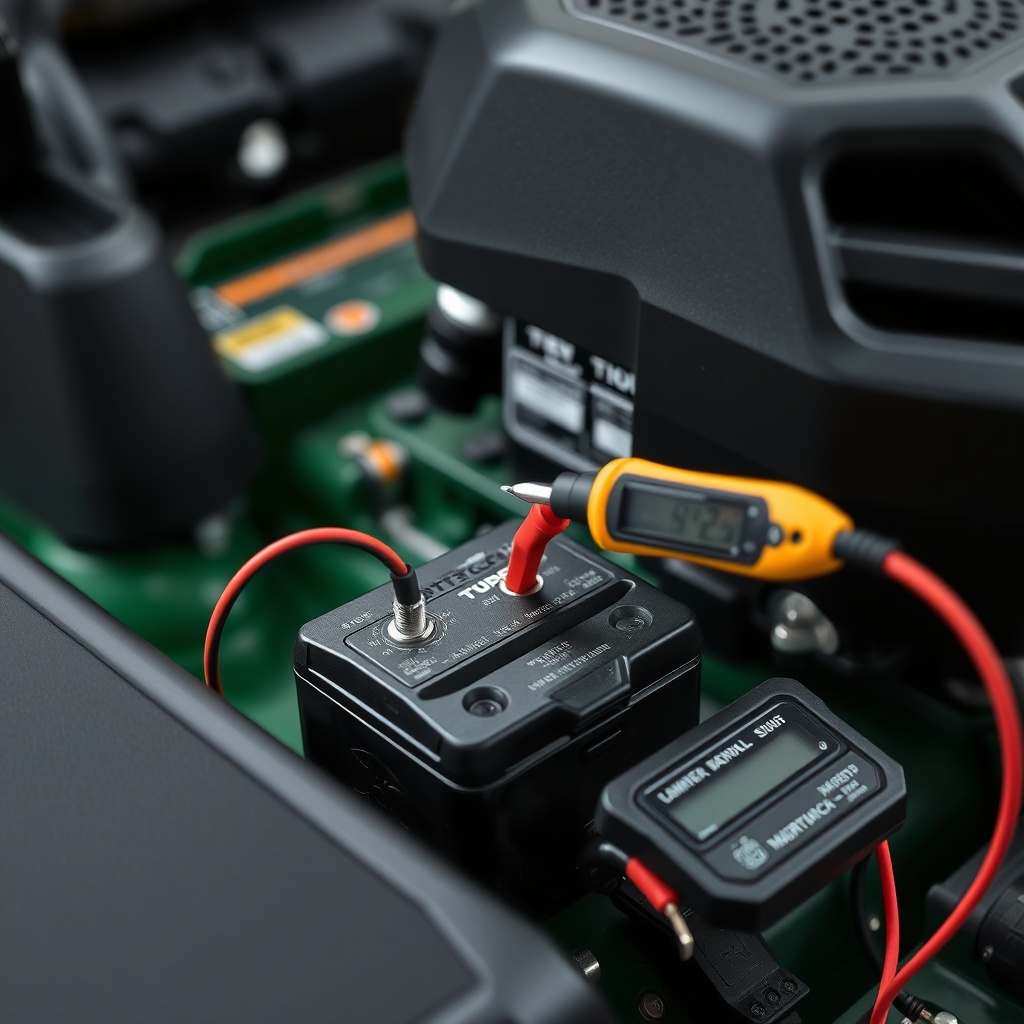
When the engine runs but the battery voltage drops instead of rising, the charging system is failing. The T-4600E uses a stator and regulator-rectifier assembly to convert AC current from the engine’s flywheel to DC for charging. The most common culprits are a defective regulator-rectifier, a faulty stator, or damaged wiring. First check: battery voltage at rest (should be about 12.6V). Then run the engine at full throttle and measure across the battery terminals—it should read 13.5V to 14.5V. If voltage stays below 12.8V or drops, the charging system is not working.
Start with visual inspection: Look for corroded, loose, or broken connections at the battery, regulator, and stator plugs. Humidity and vibration often cause green corrosion on the T-4600E’s wiring harness connectors. Clean with contact cleaner and apply dielectric grease. If connections are clean but voltage still low, proceed to test the regulator-rectifier.
2. How to Test the Regulator-Rectifier on the T-4600E?
The regulator-rectifier is a small finned metal block mounted near the engine’s cooling shroud. It converts AC from the stator to DC and regulates voltage. To test it:
- Disconnect the regulator’s harness (two spade terminals: one AC input, one DC output, and a ground).
- Set multimeter to diode test (or resistance). Check for continuity between the AC input terminal and ground—it should show a one-way diode drop (0.5–0.7V). Reverse polarity should show open circuit (no continuity). Repeat for the DC output terminal to ground.
- Voltage test with engine running: Reconnect the regulator. Set multimeter to DC volts, red lead on the DC output terminal, black lead to ground. At full throttle, you should see 13.5–14.5V. If below 12V or erratic, the regulator is faulty.
A common failure in the T-4600E is the regulator’s internal diode shorting, causing AC leakage that kills the battery. Replacement cost: $35–$60 USD (€30–€50). If the regulator passes tests, move to the stator.
3. Is the Stator the Root Cause of No Charge?
The stator is a set of coils under the flywheel that generates AC current. On the T-4600E, it typically has two wires (usually white or yellow) that connect to the regulator. To test:
- Engine off, disconnect stator wires from regulator.
- Resistance test: Measure between the two stator wires. Specification: 0.1–1.0 ohms (depending on temperature). Open circuit (infinite ohms) indicates a broken coil.
- AC voltage test: With engine running at full throttle, measure AC voltage between the two stator wires. You should see 20–40V AC. If voltage is below 15V or zero, the stator is faulty.
- Insulation test: Check resistance between each wire and engine ground. Should be infinite (no continuity). Any reading under 1 M-ohm suggests a short to ground.
Stator failure is less common than regulator failure on the T-4600E but happens due to overheating or debris hitting the coils. Replacing the stator requires removing the flywheel—a job best left to experienced mechanics. A new stator costs $50–$80 USD (€45–€70).
4. How to Check and Replace the Fuse or Circuit Breaker?
The T-4600E has a 20-amp blade fuse in the main harness near the battery. A blown fuse will stop all current flow to the electric start and charging system. However, a partially melted fuse or intermittent break can cause charging issues.
| Component | Location | Test Method | Typical Cost (USD/EUR) |
|---|---|---|---|
| 20A blade fuse | Under the seat, near battery tray | Check continuity with multimeter (should be near zero ohms) | $3–$5 / €2.50–€4 |
| 30A circuit breaker | Mounted on the engine cowl (some models) | Press reset button; check for continuity when cool | $8–$15 / €7–€12 |
| Ignition switch | In dash panel | Test with multimeter in RUN position: continuity between BATT and IGN terminals | $15–$25 / €12–€20 |
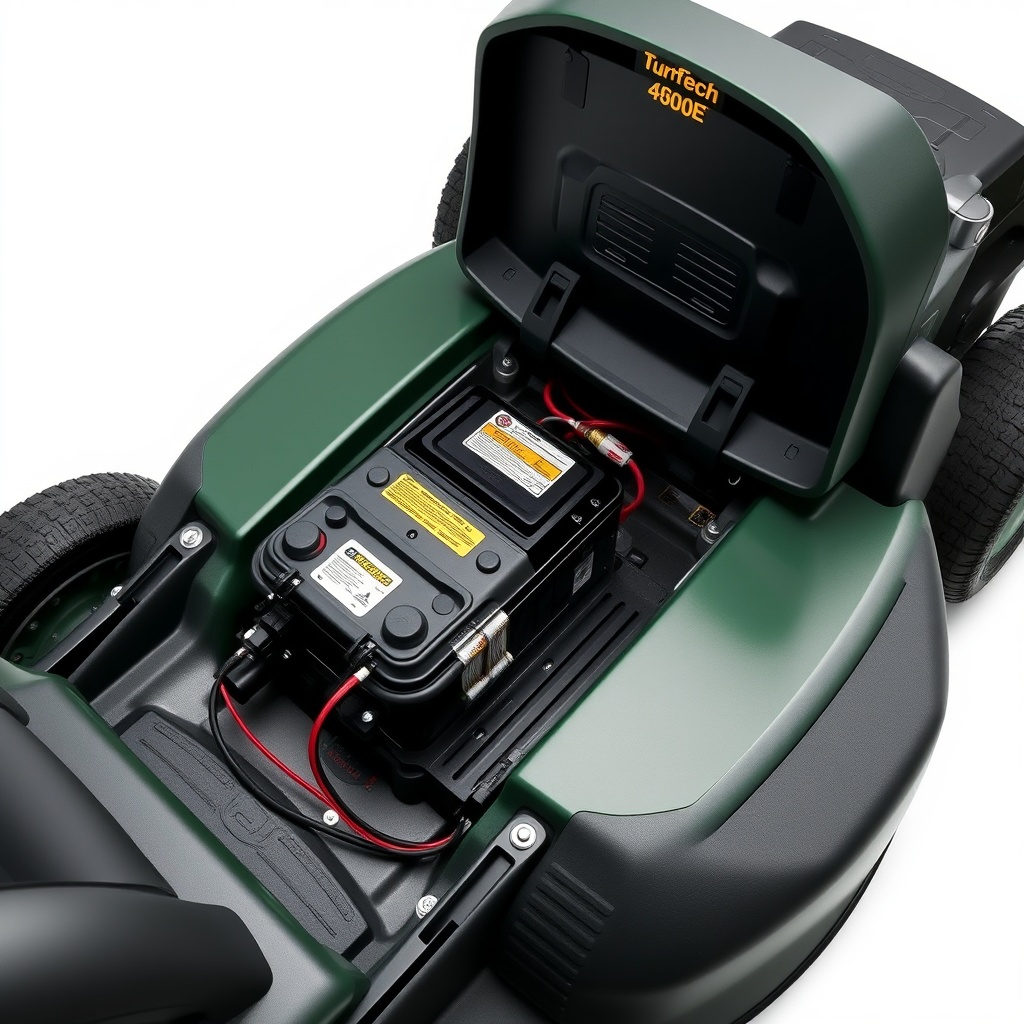
Inspect the fuse holder for corrosion—a common issue on older T-4600E units. Replace with an identical ATC blade fuse. Also, check the circuit breaker (if equipped) by pressing the reset button. If it trips immediately, there’s a short circuit downstream. For a full battery replacement guide, see TurfTech T-4600E Electric Start Battery Replacement: Step-by-Step Guide.
5. Could Loose or Corroded Battery Cables Cause No Charge?
Yes, battery cable resistance is often ignored. On the T-4600E, the negative cable connects to the chassis, and the positive cable goes to the starter solenoid and then to the regulator. High resistance due to corrosion or loose terminals can prevent charging even if the regulator works.
- Visual check: Look for green/white powdery corrosion around terminals, frayed wires near cable ends, or loose nuts.
- Voltage drop test: With engine running and lights on, measure voltage between the battery negative post and the chassis ground point—should be under 0.1V. More than 0.3V indicates a bad ground.
- Load test: Connect a 12V test light between the battery positive post and the starter solenoid terminal—if it doesn’t light, the cable is open.
Clean terminals with a wire brush and apply anti-corrosion paste. Replace any cable with cracked insulation or high resistance. Pro tip: Check the ground connection at the engine block—often covered in dirt and oil. For diagnosing the full electrical start system, refer to TurfTech T-4600E Electric Start Not Working: Diagnosis and Repair Guide.
6. What Owners Say About the T-4600E Charging Issue
User “LawnDad42” on the TurfTech forum: “Had the same problem—battery dead every morning. Turned out to be a corroded 3-pin connector to the regulator. Cleaned it with DeoxIT and never had trouble since.” Technician “MowerDoc” adds: “In six years of repairing T-4600Es, I’ve replaced about 40% regulators, 20% stators, and 40% just wire harness problems. Always start with visual checks and fuses.” Owner “GreenThumb” says: “My original battery lasted 3 years. When it wouldn’t charge, I replaced the battery and regulator together—saved a second trip. Now it starts first time every time.” Many T-4600E owners recommend upgrading the charging system when doing repairs—see TurfTech T-4600E Electric Start Conversion: Benefits and Installation Guide for modern alternatives.
7. Frequently Asked Questions
- Q: Can I jump-start the T-4600E if the battery is dead?
A: Yes, but use proper jump-start procedures with a 12V battery. Never use a 24V system. After jump-start, the charging system should bring the battery to full charge. If not, diagnose further. - Q: How long does the T-4600E battery last normally?
A: With regular use and proper charging, a good battery lasts 2–4 years. Ambient temperature and mowing frequency affect lifespan. - Q: What battery type does the T-4600E use?
A: It comes with a 12V lead-acid battery, YTX20L-BS equivalent. Many owners swap to an AGM battery for better vibration resistance. See TurfTech T-4600E Electric Start Battery Replacement: Step-by-Step Guide. - Q: Does the T-4600E charging system work at idle?
A: Not effectively. The stator outputs significant voltage only above 2500 RPM (full throttle). Always test with engine at full throttle. - Q: Will a bad oil change interval cause charging issues?
A: Not directly, but low oil can trigger a safety cutout that disables the starter. See TurfTech T-4600E Oil Change Interval and Type: Expert Guide for proper maintenance. - Q: Can I retrofit a higher-output charging coil for extra accessories?
A: Yes, aftermarket stators with 15A or 20A output are available. However, you must also upgrade the regulator-rectifier to handle the current. This is common for adding lights or a deck lift motor.