Why Is My TurfTech T-4600E Electric Start Not Responding?
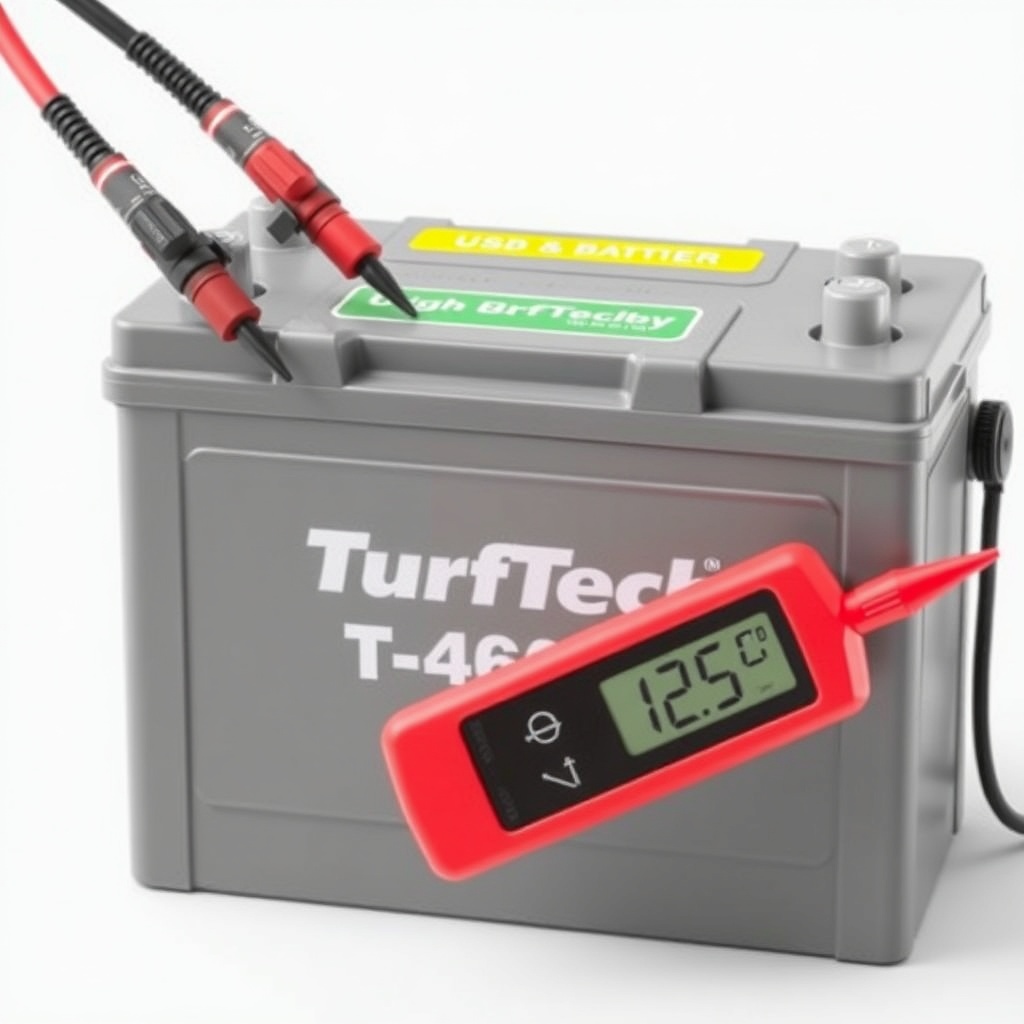
The most common reason a TurfTech T-4600E electric start fails to engage is a dead or weak battery. The starter motor requires a minimum of 12.4 volts to crank the engine. If the battery voltage drops below this threshold, the solenoid may click but the starter will not spin. Begin by checking the battery terminals for corrosion or loose connections. Use a multimeter to measure voltage at the battery posts. A reading of 12.6 volts or higher indicates a fully charged battery; anything below 12.4 volts suggests the battery needs charging or replacement. For a detailed guide on battery care, see TurfTech T-4600E Electric Start Battery Maintenance: Tips and Troubleshooting.
What Are the First Steps to Diagnose a Non-Working Electric Start?
Before dismantling anything, perform these quick checks:
- Safety switch engagement: The TurfTech T-4600E has a seat switch and a blade engagement switch. If the operator is not seated or the blades are engaged, the starter circuit is interrupted. Sit squarely in the seat, disengage the blades, and try again.
- Ignition key position: Turn the key to the “Start” position and listen for a click from the solenoid. No sound often points to a faulty ignition switch or safety interlock.
- Fuse condition: Locate the 20-amp main fuse near the starter solenoid. A blown fuse will break the circuit. Replace it with an identical 20-amp blade fuse priced around £3.50 / $4.50.
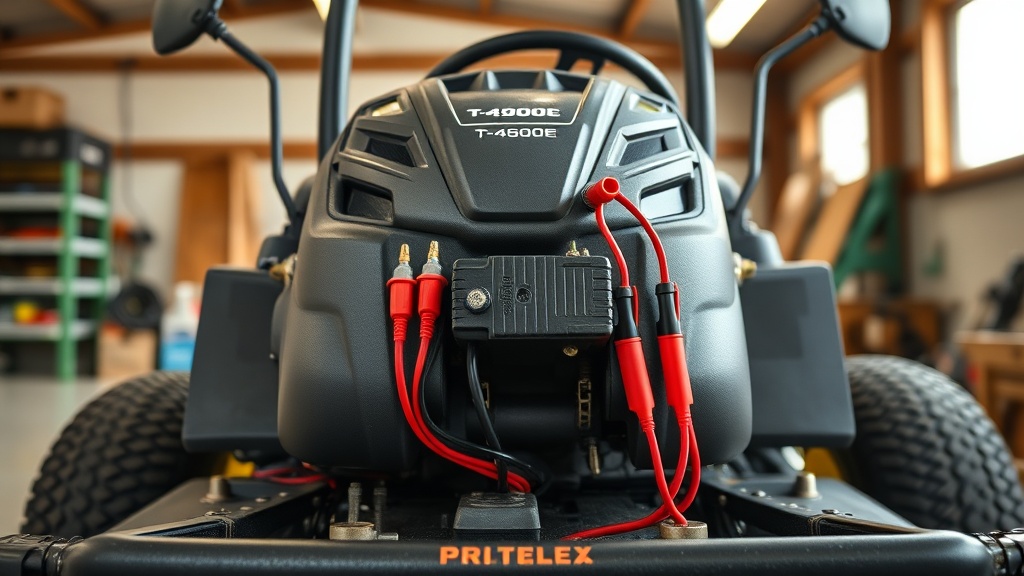
- Starter solenoid test: Use a 12-volt test light or multimeter. With the ignition off, probe the small terminal on the solenoid (often labeled “S”). Have an assistant turn the key to start. If voltage appears at the small terminal but the solenoid does not click, the solenoid is faulty. A replacement solenoid costs roughly £18 / $24.
If these steps reveal nothing, proceed to voltage drop testing as outlined below.
How Do I Test the Starter Motor and Solenoid Properly?
A methodical test saves time and money. Follow this table to evaluate each component:
| Component | Test Point | Expected Reading | Fault Indicator | Typical Repair Cost (USD) |
|---|---|---|---|---|
| Battery | Posts under load | ≥12.4V | <12.0V during crank | £50–£80 / $65–$105 |
| Starter Solenoid | Large terminal to ground | Battery voltage when key turned | No voltage or continuous click | £18 / $24 |
| Starter Motor | B+ terminal to motor case | <0.5V voltage drop when cranking | Voltage drop >0.5V or motor does not spin | £65–£95 / $85–$125 |
| Ignition Switch | Output terminal “S” | Battery voltage in START position | No voltage with key turned | £25 / $33 |
| Safety Interlock | Seat switch connector | Continuity when seated | Intermittent or no continuity | £12–£20 / $16–$26 |
Using a multimeter set to DC volts, probe the large terminal on the solenoid while an assistant attempts to start. If the voltage drops below 12.0 volts during cranking, suspect a weak battery or corroded cable. Clean all connections with a wire brush and apply dielectric grease. For persistent issues, refer to TurfTech T-4600E Electric Start Battery Not Charging: Diagnosis and Fix.
What if the Starter Turns Slowly but the Engine Won’t Fire?
Slow cranking combined with a non-firing engine suggests either a low battery capacity or a mechanical obstruction in the engine. First, confirm the battery is fully charged—use an external charger rated at 2 amps minimum. If the battery holds voltage but cranking remains sluggish, inspect the engine’s compression release system. The TurfTech T-4600E uses an automatic compression release (ACR) mechanism that can stick if the engine oil is old or low. Check the oil level: the dipstick should read between the “Full” and “Add” marks. Use SAE 10W-30 or 5W-30, and change it every 50 hours or annually. For specifics, see TurfTech T-4600E Oil Change Interval and Type: Expert Guide.
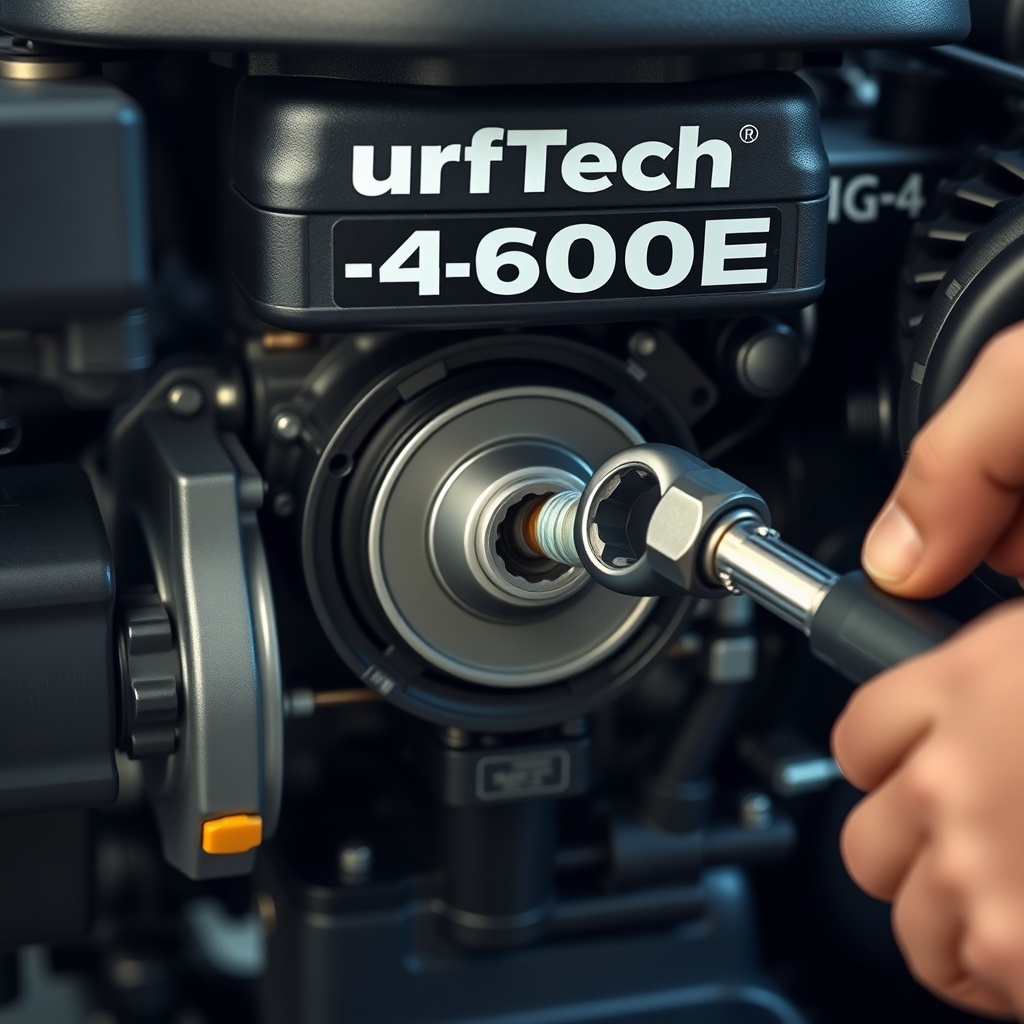
If the oil is correct, remove the spark plug and attempt to turn the engine over by hand using a socket on the crankshaft nut. Resistance beyond normal compression indicates a seized piston or valve train issue. In that case, a professional inspection is recommended.
What Owners Say About Electric Start Failures
Users report that the most frustrating part of a failed electric start is the unpredictability. One owner from Ohio wrote: “The T-4600E worked fine for two seasons, then one morning it just clicked. I had to pull-start it for a month before I found a loose ground strap near the engine block.” Another owner in Texas noted: “Replacing the battery every two years is normal, but the starter solenoid went bad at the worst time. Now I keep a spare solenoid in my toolbox.” A common theme is that cleaning the battery terminals and applying anti-corrosion spray extends the life of the starting system significantly. A third owner shared: “After adjusting the valve lash at 250 hours, the engine started much easier. I think tight valves were making the starter struggle.” For valve adjustment procedures, visit TurfTech T-4600E OHV Valve Lash Adjustment: Step-by-Step Guide and Tips.
Frequently Asked Questions
Q: My TurfTech T-4600E electric start clicks but does not crank. What is wrong?
A: This is usually a low battery voltage or a faulty starter solenoid. Measure the battery voltage while attempting to start. If it drops below 11 volts, the battery is too weak. If voltage is good, test the solenoid as described above.
Q: Can I convert the TurfTech T-4600E from electric start to pull start?
A: Yes, but it requires a pull-start assembly and removal of the starter motor. Many owners do this as a temporary fix. For a permanent solution, see TurfTech T-4600E Electric Start Conversion: Benefits and Installation Guide.
Q: How often should I replace the electric start battery?
A: Every two to three years, depending on usage and climate. Extreme heat or cold shortens battery life. Regular charging and cleaning terminals can extend it. For replacement steps, consult TurfTech T-4600E Electric Start Battery Replacement: Step-by-Step Guide.
Q: Why does my T-4600E start fine when cold but not when warm?
A: This points to a failing starter motor or a heat-soak issue in the solenoid. Allow the engine to cool for 15 minutes, then attempt to start. If it works, replace the starter solenoid, which loses effectiveness when hot.
Q: What is the ground wire location on the T-4600E?
A: The main ground strap connects the negative battery terminal to the engine block, typically near the starter mounting bolts. A secondary ground runs from the frame to the engine. Corrosion here is common; clean with sandpaper and tighten the bolt to 8 N·m (6 lb-ft).
Q: Can a bad key switch cause the electric start to fail?
A: Absolutely. The key switch sends power to the solenoid. If the contacts inside are worn or burnt, the circuit remains open. Test by bypassing the switch with a jumper wire—if the starter engages, replace the switch.