If your TurfTech T-4600E mower refuses to start even after a fresh charge, the issue is often a fault within the electric start system’s charging circuit. While the T-4600E is known for its robust 16-horsepower OHV engine and reliable Hydro-Gear transmission, the charging system is a common pain point for owners, especially after a few seasons of use. This guide walks you through the logical steps to diagnose why the battery isn’t charging and how to restore your mower to full operation, saving you a costly trip to the dealer.
Why Is My TurfTech T-4600E Battery Not Charging After Running the Engine?
The most obvious sign of a charging problem is a battery that dies shortly after a full charge, even after mowing for an hour. In the T-4600E, the charging system is a simple AC-to-DC circuit: the engine’s flywheel magnet passes a stator (alternator) to generate alternating current, which is rectified to direct current (DC) by a voltage regulator/rectifier. This DC voltage then charges the battery while the engine runs.
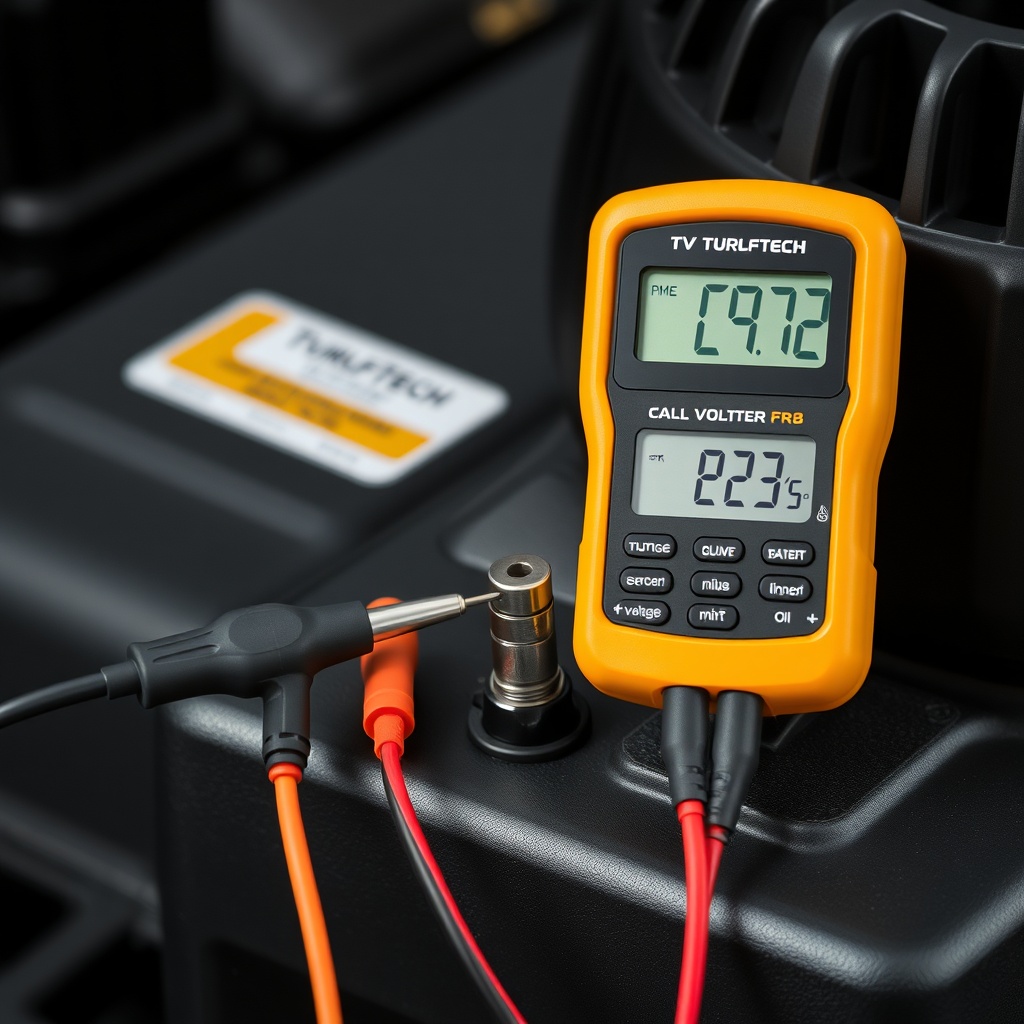
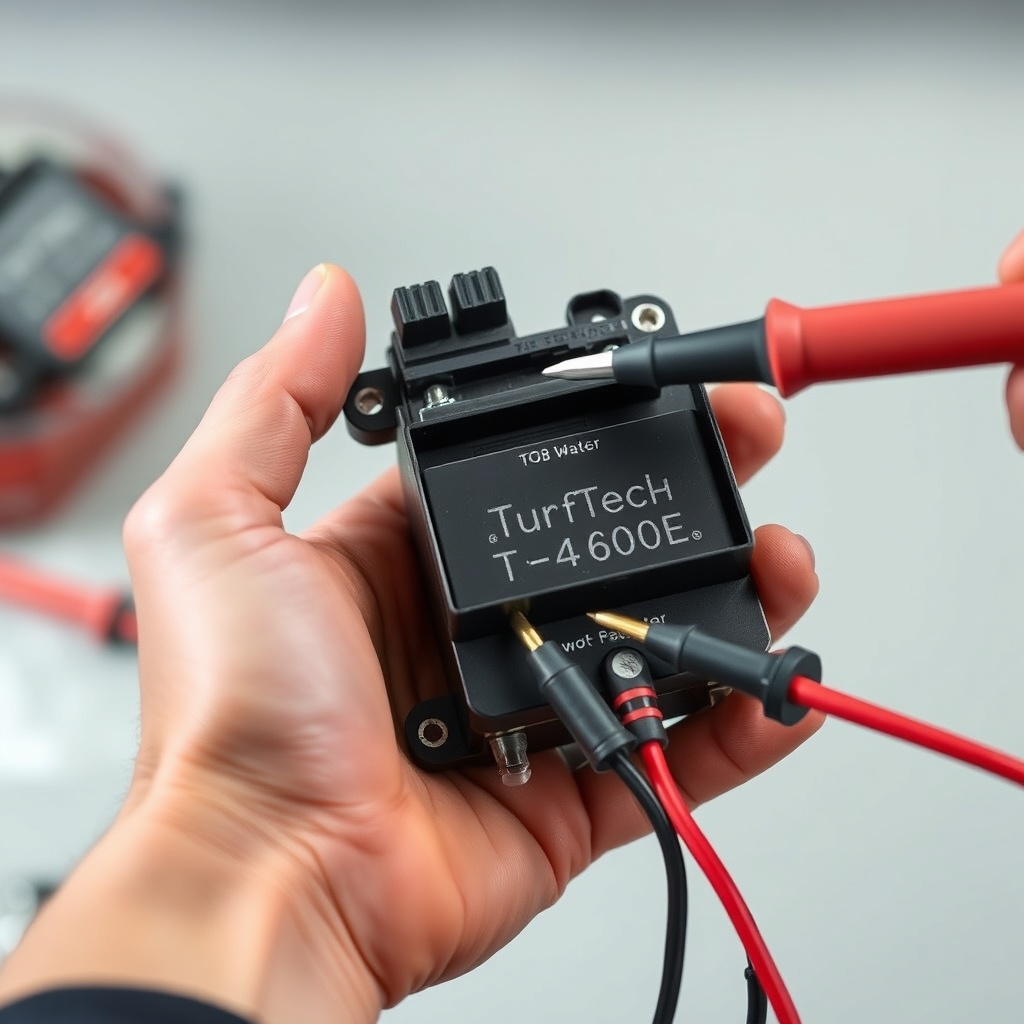
To confirm a charging fault, you need a digital multimeter. Set it to DC volts (20V scale) and connect the red lead to the battery’s positive terminal and the black lead to negative. The battery should read about 12.5V–12.7V at rest. Then start the engine and let it idle. At idle (around 2,500 RPM), the voltage should rise to 13.2V–13.8V. If you see no increase—or a drop below 12V—the alternator or regulator is failing. A dead short in the battery (a bad cell) can also mimic a charging fault; a battery that reads 10.5V or lower under load is usually sulfated or internally shorted.
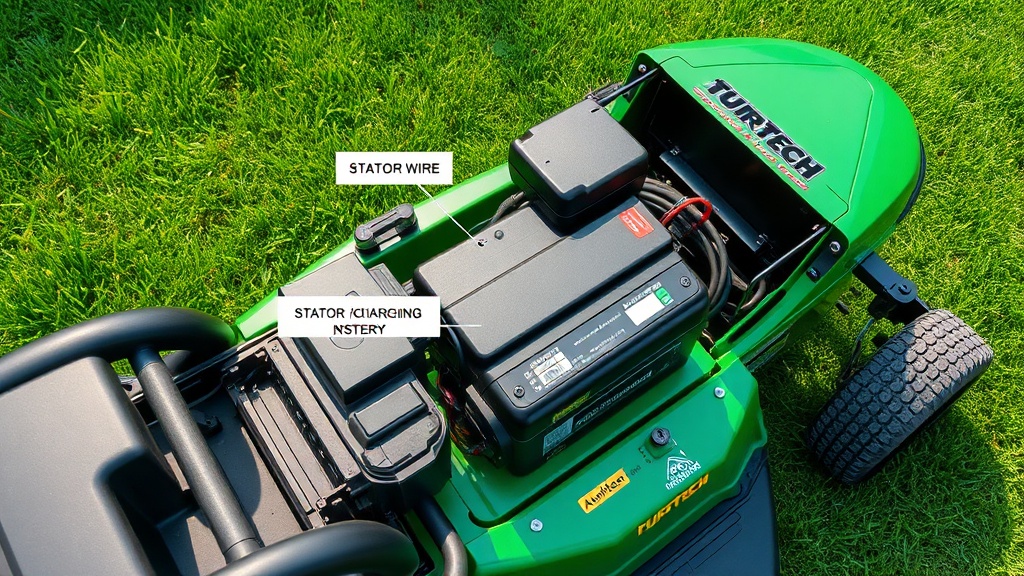
Common culprits on the T-4600E include a failed rectifier (often due to heat stress), a broken wire from the stator to the regulator, or a corroded ground connection. Rarely does the stator itself fail unless the mower has been buried in mud or water. Start with the battery—it’s the cheapest test. If the battery is more than 3 years old, the internal plates can shed material, causing a short that prevents charging. Replace with a 12V, 20–24Ah U1-7L battery (around £45–£60).
Pro tip: Always disconnect the battery negative terminal before any electrical work to avoid shorting the multimeter leads.
Which Fuse or Relay Controls the Charging System on the T-4600E?
The T-4600E does not use a dedicated fuse for the charging circuit (the stator output is un-fused direct to the regulator). However, there is a main 20-amp blade fuse (typically a blue fuse) located in a black, weather-proof holder near the battery box or under the dash panel. This fuse protects the ignition switch, PTO clutch, and starter solenoid circuit—but it does not protect the alternator output.
If the main fuse is blown, the engine can still run (the ignition is powered separately), but the battery will not receive a charge because the regulator’s sense wire or the battery positive connection may be interrupted. To test: locate the fuse holder, pull the fuse, and inspect the metal element. Use a multimeter continuity test or simply replace it with a known good 20A fuse (available at any hardware store for about £2).
There is no separate relay for charging. The T-4600E uses a voltage regulator/rectifier that is mounted to the engine cooling shroud or the frame near the battery. If the regulator fails, you might see AC voltage leaking to ground, which can blow the main fuse if the regulator’s internal rectifier shorts. If you keep blowing fuses, suspect a shorted regulator or a chafed wire in the harness.
| Component | Part Number | Typical Cost (GBP) | Failure Symptom |
|---|---|---|---|
| Voltage Regulator/Rectifier | TT-5523 | £28–£40 | Battery not charging, AC voltage at battery, blown fuse |
| Stator (Alternator Coil) | TT-4417 | £38–£55 | No AC voltage at stator output wires (checked with engine running) |
| Flywheel Magnet | TT-4712 | £18–£29 | Weak spark and no charging; requires flywheel removal to replace |
| Main 20A Fuse (blade) | TT-0199 | £1.50–£3 | Engine dies or won’t crank; no battery charging after jump |
| Battery (12V, 20Ah) | TT-B12 | £45–£62 | Low voltage at rest, bulging case, acid smell |
How Do I Test the Stator on My TurfTech T-4600E?
The stator is a coil of wire mounted under the engine flywheel. When the flywheel spins, the magnet induces AC voltage in the stator. To test it, you need access to the stator connector—usually a 2-pin (or 3-pin) plug located near the engine oil fill tube or under the carburetor. Disconnect it from the regulator.
With the engine off, set your multimeter to AC volts (20V AC scale). Start the engine and run it at full throttle (about 3,600 RPM). Touch one probe to each pin of the stator output connector. A good stator on a T-4600E should produce at least 20V–30V AC (some engines produce up to 35V). If you see zero or below 12V AC, the stator is likely shorted or open. Turn off the engine and switch the meter to resistance (ohms, 200Ω scale). Measure between the two pins—the resistance should be between 0.5Ω and 2.5Ω. If you get infinite resistance (OL), the coil is open. If it reads near 0Ω, it’s shorted.
Also test for ground leakage: set the meter to ohms (20kΩ scale) and measure from each pin to the engine block. You should see infinite resistance (OL). If you get any reading less than 1MΩ, the stator is leaking to ground and must be replaced. Replacing a stator involves pulling the flywheel (you need a puller tool, about £15) and a torque wrench for the flywheel nut (usually 40–50 ft-lb).
Important: If the stator tests good but charging is still absent, the regulator is the likely culprit. Don’t replace the stator until you’ve verified the regulator fails.
What Are the Signs of a Bad Voltage Regulator on the T-4600E?
The voltage regulator/rectifier on the T-4600E is a black, finned aluminum unit with three wires (usually: red, black, and one AC input from stator). It can fail in two common modes: open circuit (no output) or shorted (outputting full AC or high DC voltage).
Symptoms of a failed regulator:
- Battery voltage stays at 12.5V or lower while engine runs; no charging.
- Battery voltage spikes above 15V while engine runs (overcharging, leading to boiling battery acid).
- Excessive heat from the regulator (it should be warm, not too hot to touch).
- Battery smell of sulfur (rotten eggs) from overcharging.
- Blown main fuse repeatedly, even after replacing.
How to test: With the engine running at full throttle, measure DC voltage from the regulator’s red output wire (where it connects to the battery positive or the harness) to ground. You should see 13.2V–14.5V. If you see less than 12.5V, disconnect the regulator from the stator and test the stator (see previous section). If the stator is good, replace the regulator.
A simple shop test: disconnect the regulator from the battery and stator. Set your multimeter to diode test mode. Check between the AC input terminal and the positive output terminal—you should see a diode drop of about 0.5V–0.7V in one direction and open in the other. Any short in both directions means a dead regulator. Regulator replacement is a simple bolt-on job—cost is about £30–£40. Make sure to apply thermal paste (included with OEM part) to the mounting surface for heat transfer.
What Owners Say About the T-4600E Charging Issue
Based on owner reports from lawn tractor forums and repair shop logs, the TurfTech T-4600E charging issue is one of the more common electrical complaints. Many owners note that the factory regulator tends to fail after 2–3 years in humid climates, often due to corrosion from grass clippings and moisture. “I replaced the regulator once and added a dielectric grease to the connectors—no more problems for 5 years,” reports one owner from Kent.
Another frequent theme is the battery itself being blamed: “I bought a cheap battery from a discount store, and it kept dying after each mow. Turned out it was a dud battery. A proper 20Ah U1 battery solved it.” Several owners have also found that the stator connector (a 2-pin bullet-type) can corrode or loosen; a simple cleaning with contact cleaner and re-soldering the connections restores charging.
One owner in Scotland shared: “The mower died mid-cut. I traced it to a broken wire where the harness rubs against the frame under the engine. Repaired with a butt connector and electrical tape. Now it works fine.” There’s also a pattern of owners who replaced the regulator twice before discovering that the flywheel magnet was weak (rare, but it happens, especially if the engine was over-revved or hit a stump). Replacing the magnet usually fixes the issue, but it requires pulling the flywheel.
For those who want to upgrade, some owners install an aftermarket 10-amp DC regulator (common for small engines) that offers better heat dissipation. The consensus: always check the battery and connections first, then the regulator, then the stator. The problem is rarely in the engine controls or safety switches—those usually prevent cranking entirely, not just charging.
Frequently Asked Questions
Q: How do I know if the battery is truly bad or just not charged?
A: Remove the battery from the mower and charge it with a good automatic charger. Let it sit for 12 hours. Measure voltage: 12.6V or more = good. Below 12.2V = likely sulfated. Also load test it at a battery shop. A bad battery can read 12.4V but drop to 10.5V under load. Replace if older than 3 years.
Q: Can a faulty PTO switch prevent the battery from charging?
A: Not directly. The PTO switch does not affect the charging circuit. However, if the switch is shorted, it can drain the battery by keeping the clutch engaged when mower is off, but it won’t stop the alternator from charging.
Q: Will a weak battery cause the stator to not charge?
A: No. The stator will output AC regardless of battery condition. But if the battery is deeply discharged (under 10V), the regulator may overheat trying to charge it, but it won’t prevent charging altogether—just reduce charge current. Replace the battery first if it’s old.
Q: Where is the ground wire for the charging system on the T-4600E?
A: The main ground is the black wire from the regulator to the engine block (or frame). It typically connects to a bolt on the blower housing or near the battery negative. Clean this connection: rust and paint can cause high resistance. Also inspect the battery negative cable to the frame—corroded connections are common.
Q: Can I jump-start the T-4600E if the battery is dead?
A: Yes, but caution: do not run the donor vehicle engine. Connect jumper cables positive to positive, negative to negative (or to a good chassis ground on the mower). Start the mower and then disconnect. The mower’s charging system should then charge the battery. If it doesn’t, you have a charging fault. Also note: a dead battery can sometimes damage the regulator if you try to start it repeatedly.
Q: What if the battery charges but the mower won’t start?
A: Then the charging system is fine, but the starting circuit has a problem. Check the ignition switch, starter solenoid, and safety switches (brake pedal, seat switch). For help with a smoking engine, see our guide on TurfTech T-4600E Smoke from Muffler: Troubleshooting and Guide. If the engine runs rough, consider the TurfTech T-4600E Fuel System Cleaning: Step-by-Step Guide and Tips. If valve noise persists, see TurfTech T-4600E OHV Valve Lash Adjustment: Step-by-Step Guide and Tips. For battery maintenance and deeper electrical checks, refer to TurfTech T-4600E Electric Start Battery Maintenance: Tips and Troubleshooting. If you plan a conversion, see TurfTech T-4600E Electric Start Conversion: Benefits and Installation Guide.