
Why Does the TurfTech T-4600E Use a Modular Pin System for Deck Adjustment?
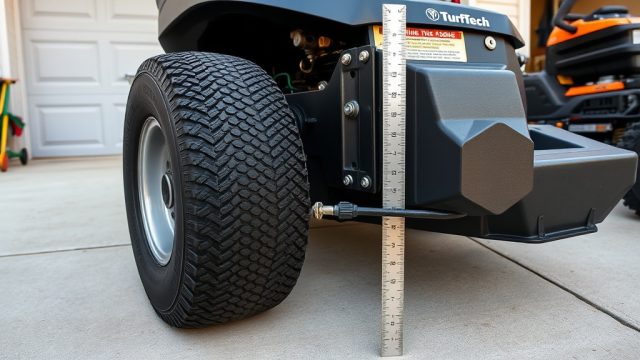
The TurfTech T-4600E stands apart from many residential mowers through its modular pin system for deck height adjustment. Instead of the typical single-lever spring system found on budget models, the T-4600E employs four independent locking pins—one at each corner of the deck. This design enables separate adjustment of the front and rear deck height, critical for achieving the correct mowing attitude (0.5 inch lower in front for most turf types). The system relies on a series of detent holes at each pin station, offering 1/4-inch increments across a 1.5- to 4.5-inch cutting range. Understanding this mechanism is essential before any adjustment attempt, as forcing a frozen pin or overlooking a misaligned bushing can lead to stripped threads or a crooked deck. This guide walks through every step to ensure a square, level cut every time.
What Tools and Safety Gear Do I Need Before Starting?
Before engaging with the pin system, gather the following items to avoid mid-job trips to the workbench. The T-4600E uses metric fasteners for the deck retention bolts, so standard SAE sockets will not fit. A 13 mm wrench and a 10 mm socket with a ratchet are mandatory. For the pin operation itself, a rubber mallet (not a steel hammer) is recommended to tap stubborn pins free without damaging the zinc-plated steel. A flat-blade screwdriver and spray lubricant (WD-40 or a silicone-based product) assist if pins are corroded. Safety glasses are non-negotiable—during bushing alignment, debris can spring upward. Also have a 24-inch carpenter’s level on hand to verify the final deck plane. If your electric start system is suspect, consult the TurfTech T-4600E Electric Start Battery Replacement: Step-by-Step Guide before proceeding, as a drained battery can prevent the PTO engagement needed for blade removal.
How Do I Access and Release the Deck Locking Pins?
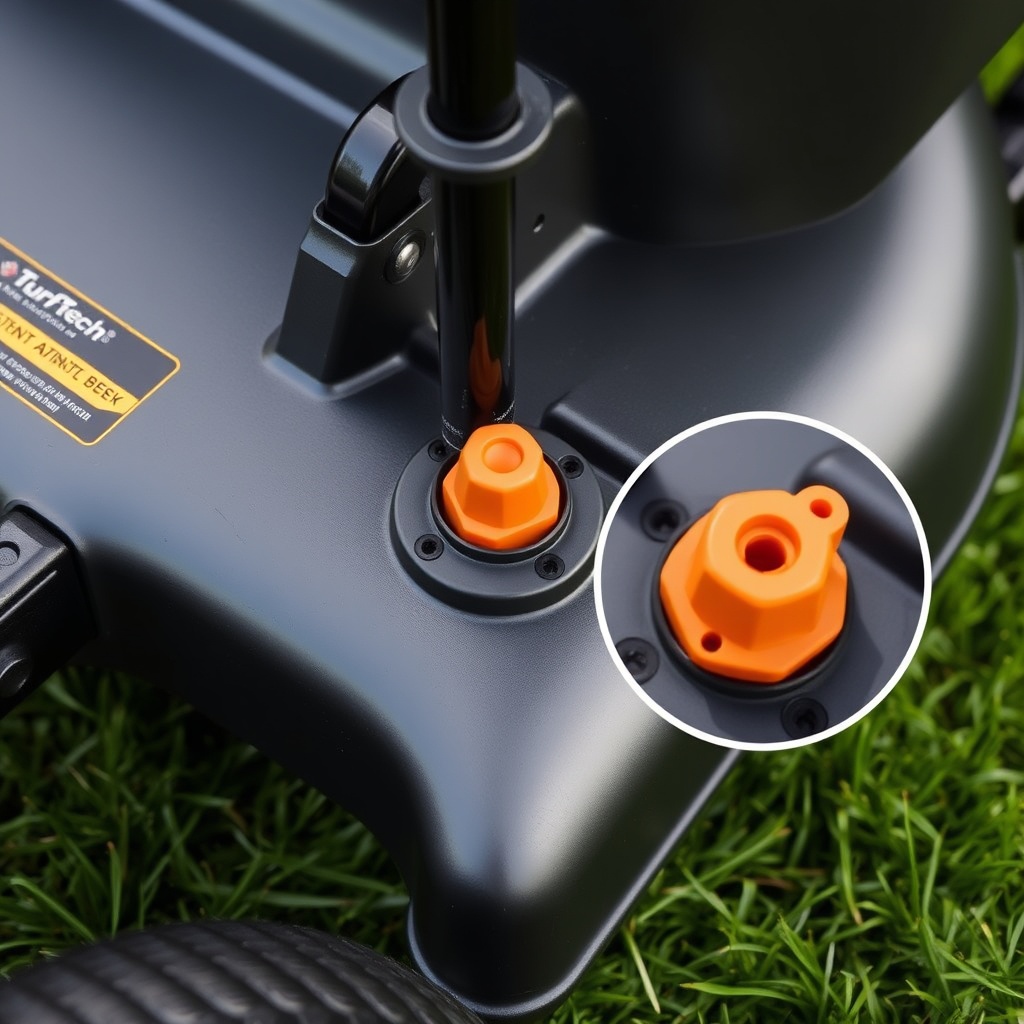
The modular pin system consists of four stations: two on the front axle bracket and two on the rear axle bracket. Each station has a spring-loaded pin with a nylon-insert lock nut. Begin by parking the T-4600E on a level concrete surface with the engine off and the parking brake engaged. Disconnect the spark plug wire to prevent accidental start. Crawl under the front right corner of the deck. Locate the orange pin handle; it protrudes from a cylindrical housing bolted to the bracket. Pull the pin outward against spring tension by hand. If it resists, do not force it. Instead, spray lubricant into the pin housing and let it sit for two minutes. Use the rubber mallet to tap the pin handle firmly—this usually frees it. With the pin retracted, the deck will drop slightly. Secure the pin in the retracted position using the built-in locking groove (rotate the pin 90 degrees clockwise until it clicks into the notch). Repeat this procedure for the remaining three stations. Note that the rear pins often have more tension due to the heavier transmission weight; you may need to use a floor jack under the rear axle to relieve pressure on the rear pins. If your electric start does not respond during subsequent PTO testing, refer to the TurfTech T-4600E Electric Start Not Working: Diagnosis and Repair Guide for troubleshooting steps.
How Do I Set the Desired Cutting Height Using the Pin Detents?
With all four pins retracted, the deck rests on its full-floating linkage. To set a uniform cutting height, you must select the same detent hole position at all four corners. The T-4600E’s deck bracket has numbered detent holes (1 through 12) starting from the lowest position. Refer to the specification table below to map hole number to actual cutting height. For a standard 3-inch cut, select hole 8 at all four stations. Begin at the front left station: retract the pin from its locking groove and align it with hole 8. Push the pin inward until you hear the spring click. Verify the pin fully passes through the bracket and into the deck mount. Do not rely solely on visual alignment; a pin that sits halfway can dislodge during mowing. Repeat for front right, rear left, and rear right. After all pins are seated, manually rock the deck side to side. If you feel more than 1/4 inch of play, one pin is likely not fully engaged. Recheck each station. For an even cut, measure the blade tip height using a ruler at each corner; the front should be 0.5 inch lower than the rear. This “pitch” ensures good grass lift without scalping. If you observe uneven discharge, the deck may need a level check.
| Detent Hole Number | Cutting Height (inches) | Typical Use |
|---|---|---|
| 1 | 1.5 | Lowest, scalping risk |
| 2 | 1.75 | Bermuda grass short cut |
| 3 | 2.0 | Fine fescue |
| 4 | 2.25 | Transitional grasses |
| 5 | 2.5 | Standard cool-season |
| 6 | 2.75 | Tall fescue |
| 7 | 3.0 | Average lawn |
| 8 | 3.25 | Slightly taller |
| 9 | 3.5 | Rough areas |
| 10 | 3.75 | Last cut before winter |
| 11 | 4.0 | High grass settings |
| 12 | 4.5 | Maximum height |
What If a Pin Gets Stuck or the Bushing Is Seized?
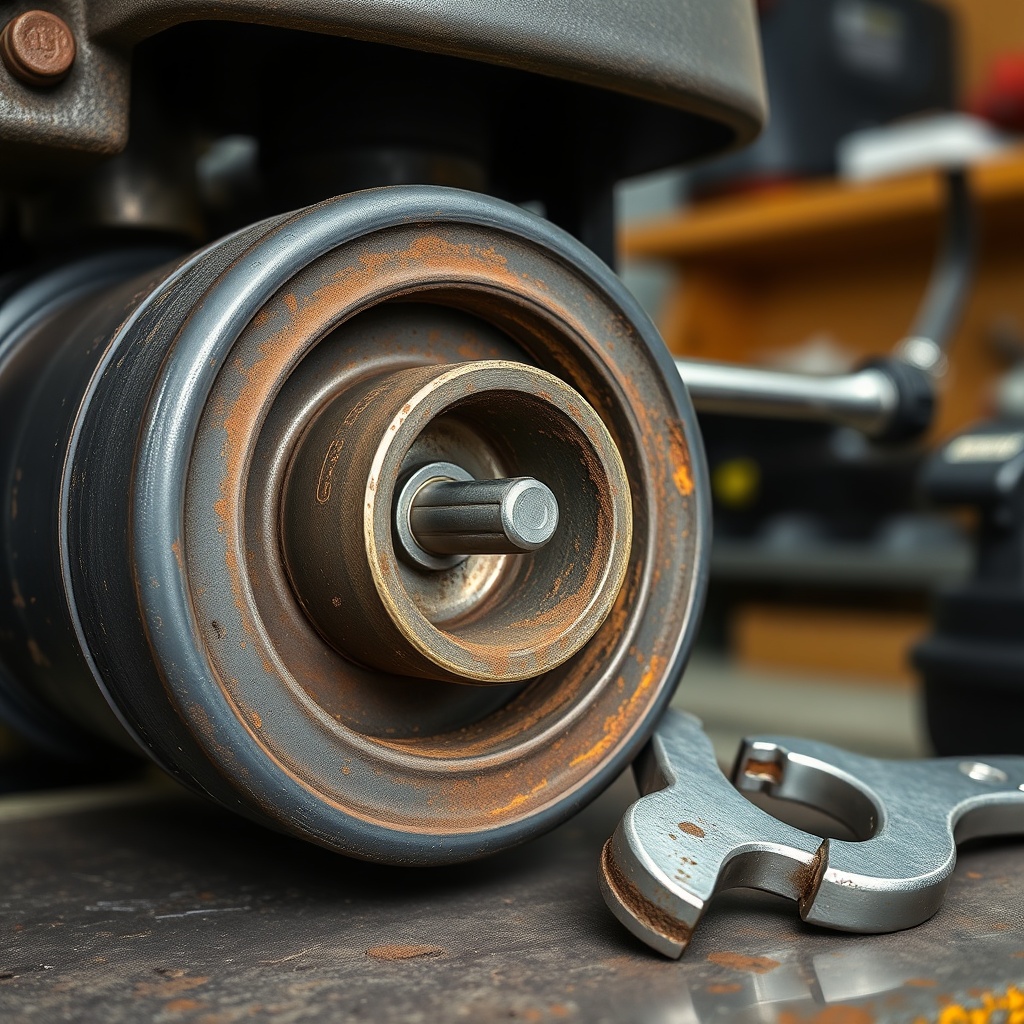
Stuck pins are the most common complaint on the T-4600E, especially in humid climates or after winter storage. If a pin will not retract after lubrication and gentle tapping, inspect the bushing bore. With a flashlight, look for rust buildup or grass clippings packed around the pin shaft. Use a 1/8-inch punch and the rubber mallet to drive the pin inward from the opposite side if accessible. If the pin is completely seized, you must remove the deck retention bolt (13 mm) and drop the deck onto jack stands. This exposes the bushing. Clean the bushing with a wire brush and apply anti-seize compound before reinstalling the pin. Do not use grease—it attracts debris. In severe cases, the nylon insert lock nut may have fused to the pin threads. Replace the nut (available as part number 725-0415 for roughly $4.50 USD per nut). If you notice the electric start struggling while the deck is partially lowered, the pin may be interfering with a wiring harness; check the TurfTech T-4600E Electric Start Battery Not Charging: Diagnosis and Fix article for related issues. Always test the PTO engagement after adjusting the deck height, as a misaligned pin can prevent the safety switch from making contact.
How Do I Verify the Deck Is Level After Adjustment?
Even with all pins set to the same hole number, the deck may not be perfectly level due to wear in the linkage or uneven tire pressures. Park the mower on a flat surface and ensure all four tires are inflated to 15 psi (check the tire sidewall for exact spec). Position the mower with the blades disengaged. Raise the deck to the transport position (highest setting) and then lower it back to the desired cutting height. This resets the linkage. Measure from the blade tip to the ground at the front and rear of the deck. Use a straight edge across the blade tips (engine off, spark plug disconnected). The difference between front and rear measurements should be 0.5 inch (front lower). If the deck is out of level by more than 0.25 inch, you need to adjust the individual pin station. For example, if the left rear is 0.75 inch higher than the right rear, move the left rear pin down one detent hole (e.g., from hole 8 to hole 7). Check again. Repeat until all corners are within 0.125 inch of each other. If you cannot achieve leveling despite pin adjustments, the deck suspension brackets may be bent. In that case, contact a TurfTech dealer. For owners suffering from vibration issues due to an unbalanced deck, the TurfTech T-4600E Noise Reduction Techniques: Muffler Upgrade and Vibration Dampening article offers practical cures.
What Owners Say
Long-term users of the T-4600E routinely praise the modular pin system for its durability compared to the plastic levers on competitor models. On forums, owner “GrassMaster2024” writes: “After three years, my pins still click into place like new. I lubricate them twice a season with silicone spray, and they never freeze.” Another owner, “MidwestMower,” notes: “It takes about 10 minutes to change the height on all four corners, but the precision is worth it. My lawn has zero stripes.” A common complaint centers on the physical strength required to pull the rear pins—some owners recommend using a bungee cord to hold the pin retracted while aligning. The detent numbering system receives mixed feedback: several users wish TurfTech had printed the heights directly on the bracket rather than just hole numbers. Nonetheless, the predominant sentiment is that the system outlasts the mower’s engine. For those who have experienced electric start failures during deck adjustments, the TurfTech T-4600E Starter Solenoid Replacement: Step-by-Step Guide provides a common fix. Overall, owners rate the deck adjustment system 4.5 out of 5 stars for reliability and precision.
Frequently Asked Questions
Q1: Can I adjust the deck height without disconnecting the spark plug?
A1: Technically yes, but it is highly unsafe. The engine could accidentally start if the electric start is bumped. Always disconnect the spark plug wire for any under-deck work. Refer to the safety checklist in the owner’s manual.
Q2: What torque should I apply when tightening the pin lock nuts?
A2: The nylon-insert lock nuts should be tightened to 14 ft-lb (19 Nm) using a torque wrench. Over-tightening can strip the bracket threads or deform the bushing. Under-tightening allows the pin to vibrate loose during mowing.
Q3: How often should I lubricate the pin system?
A3: Lubricate every 50 operating hours or at the start of each mowing season. Use a dry silicone spray or PTFE lubricant. Avoid oil-based products that attract dust and grass clippings, which can accelerate bushing wear.
Q4: Why does my deck tilt side to side even with pins in the same holes?
A4: This is usually due to uneven tire pressures. Inflate all four tires to exactly 15 psi. If that doesn’t fix it, inspect the deck suspension bushings for wear. Worn bushings can introduce up to 0.375 inch of play. Replace as needed.
Q5: Can I convert the pin system to a manual lever?
A5: No. The T-4600E’s modular design is integral to the deck structure. Attempting to retrofit a lever system would void the warranty and compromise safety. If you find the pin system too inconvenient, consider a different mower model.
Q6: What should I do if the pin breaks off inside the bracket?
A6: Stop mowing immediately. Remove the deck and drill out the broken pin using a 5/16-inch drill bit. Extract the remnants with a screw extractor. Replace with a genuine TurfTech pin kit (part number 725-0420, about $18 USD). If you need to access the starter motor during this repair, the TurfTech T-4600E Electric Start Motor Replacement: Step-by-Step Guide will help.